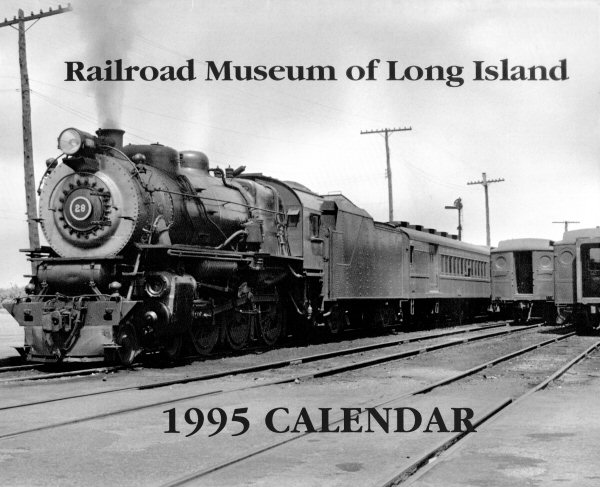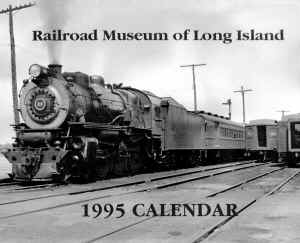
LIRR G-5s #28 at Port
Jefferson, NY
Photo: George E. Votava 06/1940
|
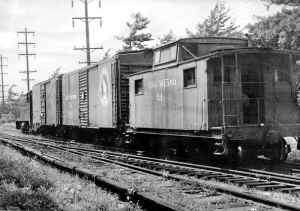
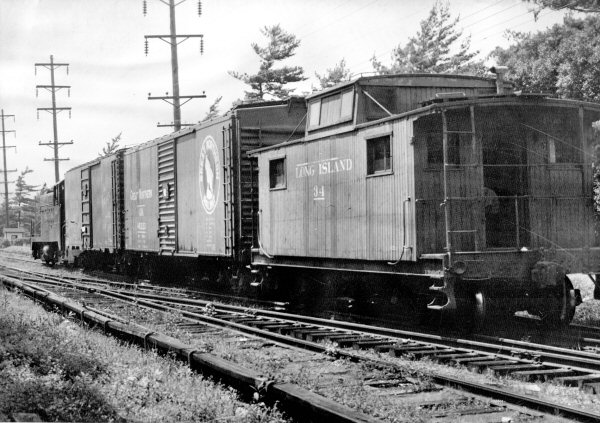
LIRR Baldwin 1000 HP
switcher #450 with caboose N-52A #34 westbound at Washington Street, Garden
City, NY
Photo: George E. Votava 07/28/1953
|
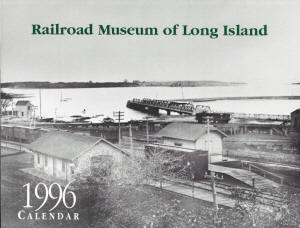
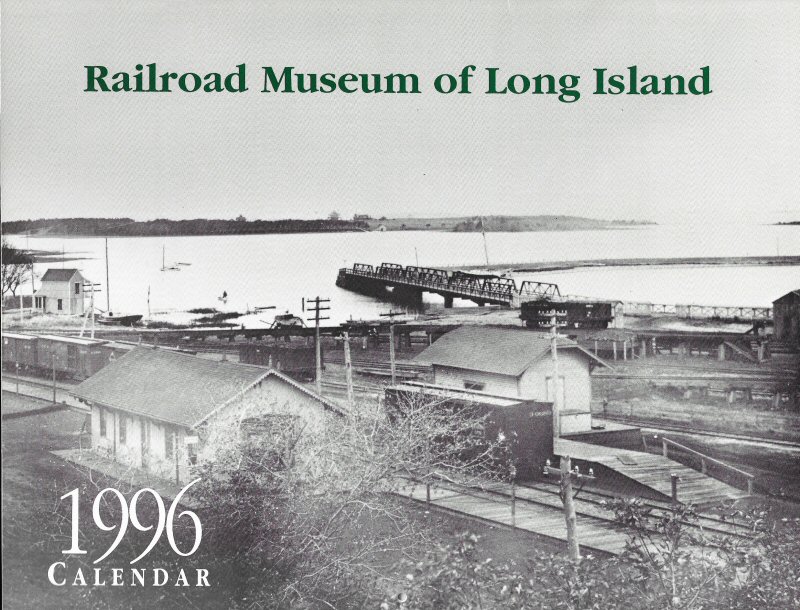
Sag Harbor wooden depot and yard - View NW 1903 Photo: Hal Fullerton
Archive: Suffolk County Historical Society |
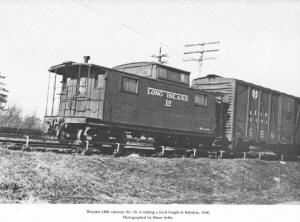
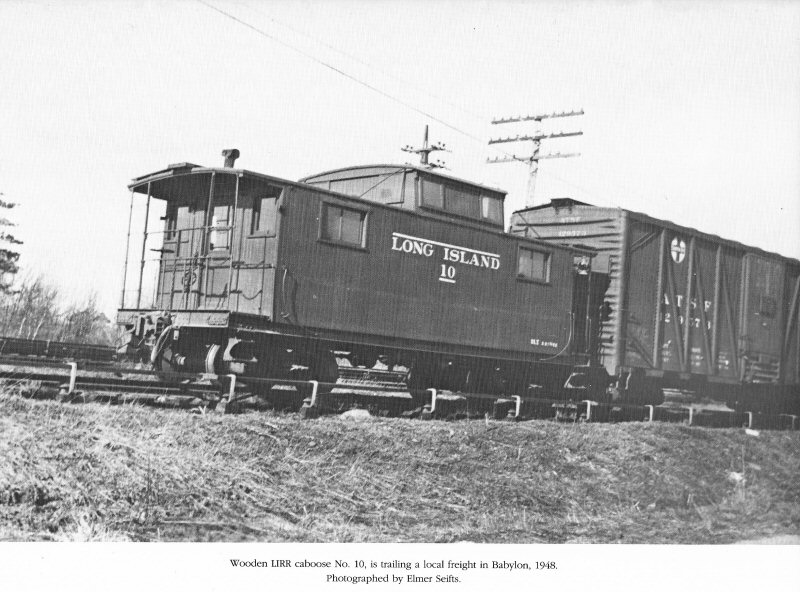
LIRR N52A #10 at Babylon in 1948
Photo: Elmer Seifts Archive: RMLI |
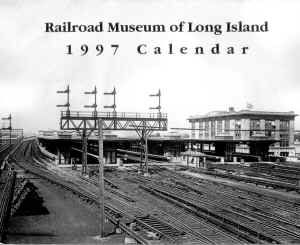
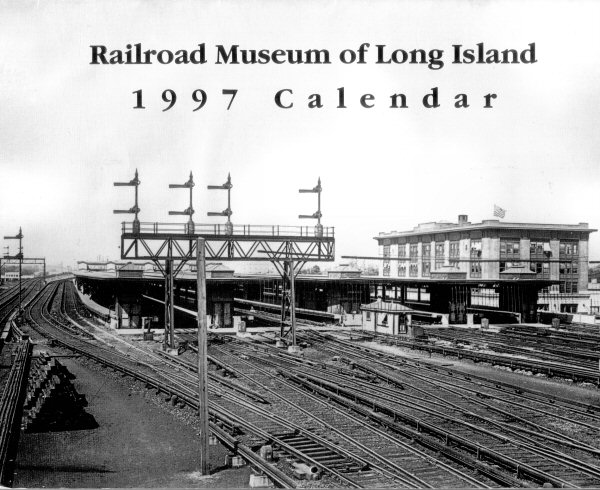
This is Jamaica Station
in 1916 from the doorway of Hall Tower looking west. All trains would be
required to stop at this station. Here trains from Eastern Long Island
locations would have their steam engines removed and an electric engine
would be coupled on to continue the journey west to NY City. Today, Jamaica
Station is one of the busiest in the country. Well over 300 trains pass
through here every day. Note the semaphores that make this a classic
railroad scene. Photo: Courtesy of the Queens Borough Chamber of Commerce
|
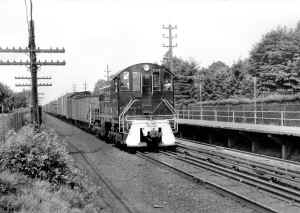
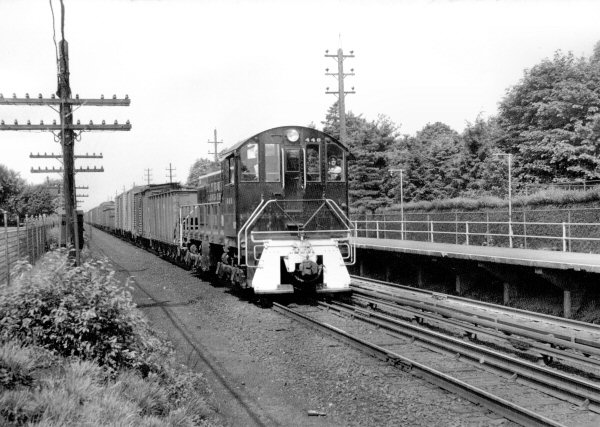
LIRR Alco AS-10 S-2
#448 seen here with a long freight for a small switch engine. The 448
is running east on the mainline near Mineola . Soon after the LIRR acquired
these engines, they painted the pilot silver for better visibility.
Photo: George E. Votava 07/08/1950
|
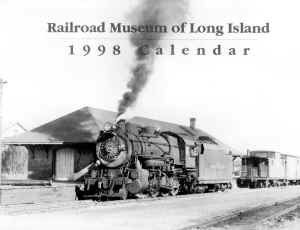
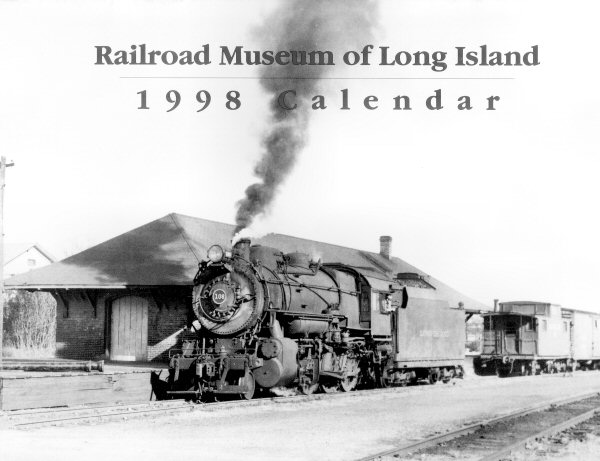
During the last years
of steam on Long Island, H-10s Consolidation No. 108 was the regularly
assigned power on the Greenport freight. Here we see 108 on a cold winter
afternoon in Greenport outside the freight house, now the home of the RMLI.
Recently acquired by the museum is N54B wooden caboose No. 14 , of the type
seen behind the engine. Contrast this photo, taken in 1955, with the rear
cover shot of today. Archive: RMLI |
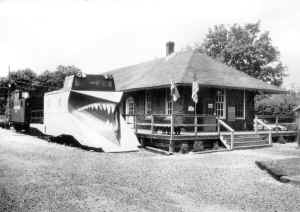
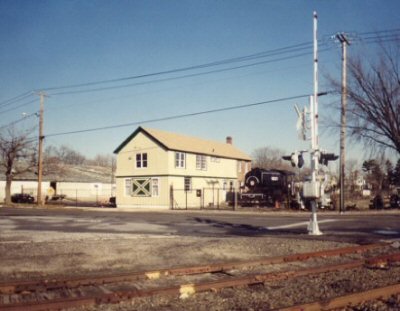
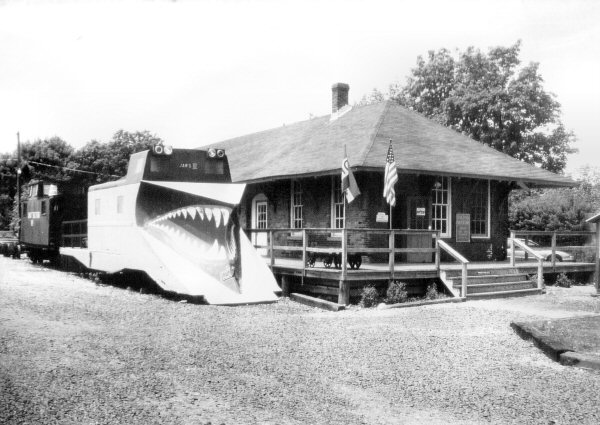
The Railroad Museum of
Long Island has come a long way in seven years. This picture taken on June
8, 1997 shows the former freight house, with gateman's shanty to the right.
In front of the museum us ex-LIRR W-83, aka "Jaws" and the museum's
newest piece in their equipment collection, ex-LIRR wood caboose No.14. Stop
in and say hello an see what has been accomplished!
Photo: Jay Eichler
|
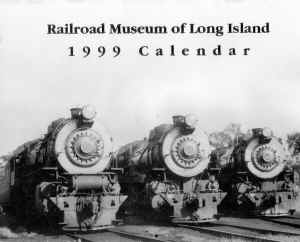
LIRRG5s' #20, #37, and
#45 await their next call to duty at Oyster Bay in 1941. Shortly after this
photo was taken, the Pennsylvania Railroad ordered all passenger steam
locomotives to carry the keystone-shaped number plate. Notice also that #20,
form the original order of G5s Ten-wheelers, carried the air reservoir tank
on the pilot, and the smokebox grabiron curled above he number plate.
Collection: Kevin T. Farrell
|
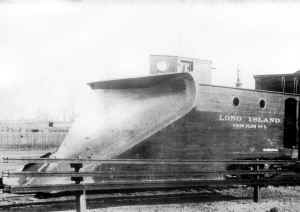
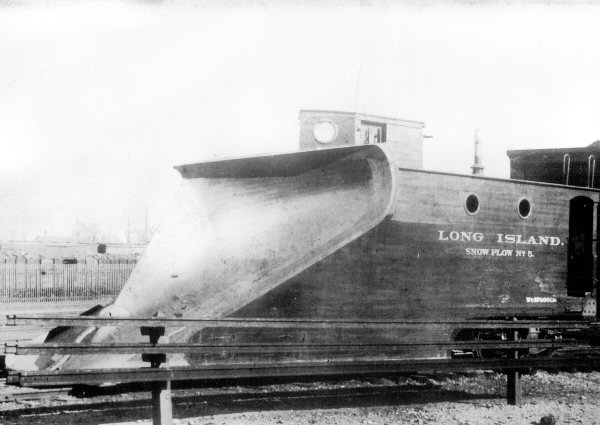
One of the charms of
old time railroading was the wedge plow used to buck snow drifts off the
tracks. The compartment atop the plow was used by the conductor who signaled
to the engineer behind him how to proceed. One of the great dangers
was that the plow would hit a large patch of ice, derail and catch fire from
the coal stove inside falling over. Pictured is LIRR Snow Plow #5 at
Greenport at the turn of the century.
Collection: Railroad Museum of Long Island
|
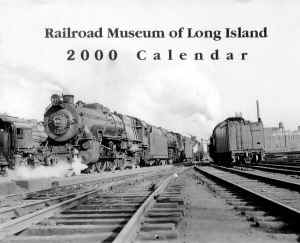
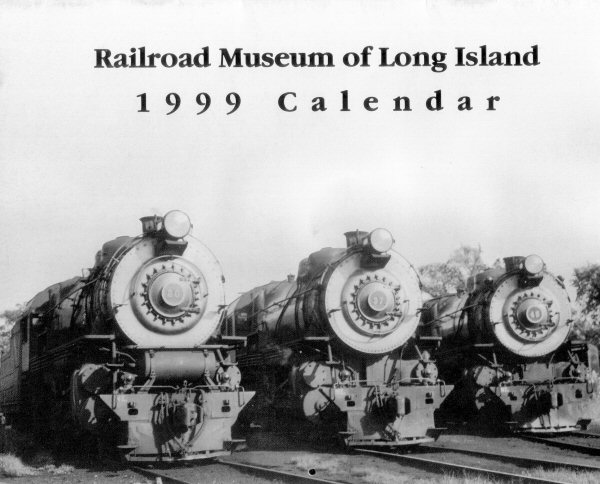
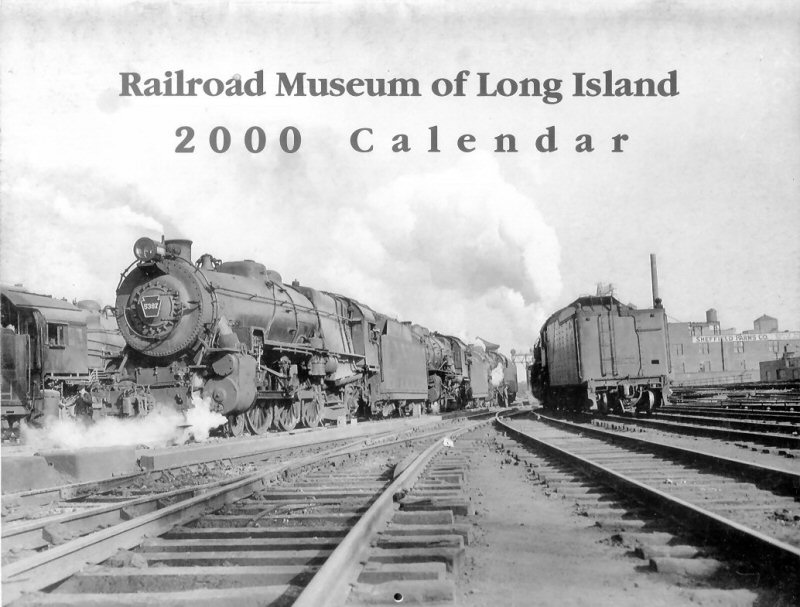
The Morris Park Shops
were always a flurry of activity, and one could find any class of steam
locomotive operated on the LIRR at almost any time. To the left, locomotives
entering the shop complex are arriving from eastern destinations
awaiting their chance to be turned, watered, and serviced. Up first is
leased Pennsylvania K4s #5387. To the right are the ready tracks, were the
steamers awaited their next run to point east. Archive: RMLI |
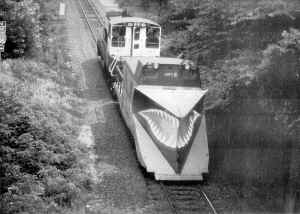
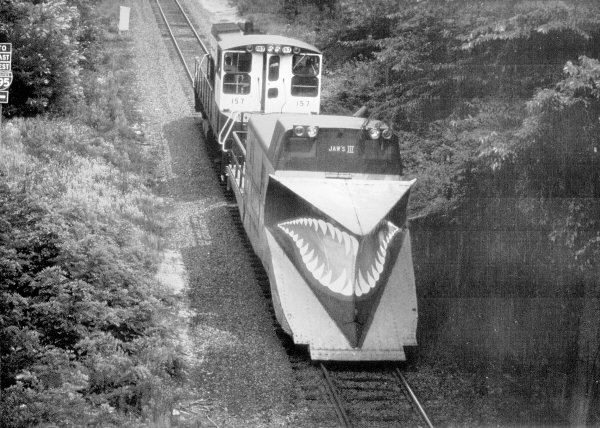
In 1986, the LIRR
retired snowplow W-83, known more affectionately in her later years as
"Jaws", for reasons made obvious by this photo. It was acquired by
Project 39, a predecessor group to the museum. Pictured her on its journey
to Riverhead after its acquisition, the plow now resides outside the
museum's facility in Greenport. Archive: RMLI |
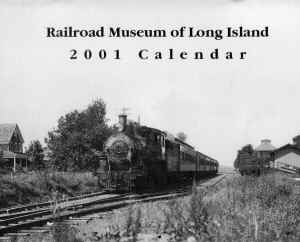
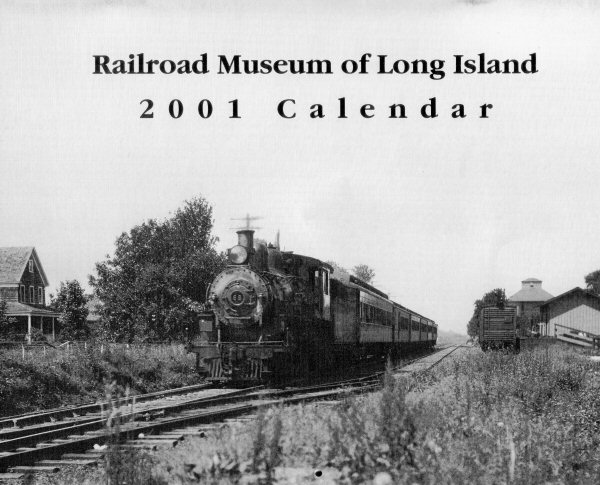
The 4-4-40 wheel
arrangement was so prevalent among American railroads that they were known
as "American" types. The LIRR was no exception to this rule,
rostering a large fleet of American types during the steam days. Pictured on
the cover is one such engine, #82, heading eastbound through Central Islip
in 1920. The building to the right was the freight house. Photo: George G.
Ayling, Collection: J.P. Krzenski
|
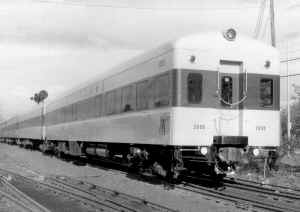
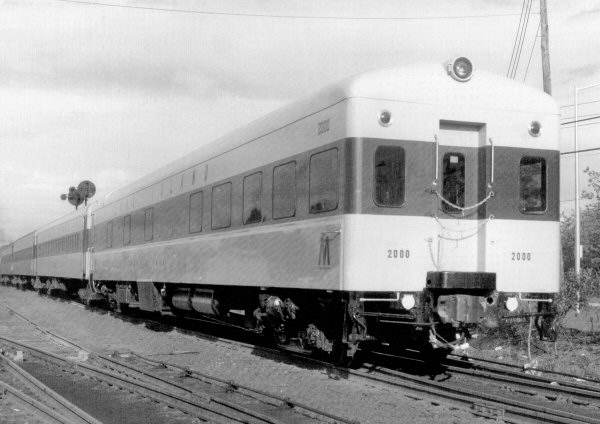
In 1968, to supplement
the LIRR's aging fleet of heavyweight parlor cars, the LIRR began purchasing
lightweight sleeping cars from other railroads. One of those cars was former
B&O blunt-end lounge car Napanee. Originally named the Amagansett
and numbered 2000, it was converted to a dual-mode parlor in 1980-81 and
renamed the Morris Park. Generally assigned to Greenport parlor
service, we see the Morris Park bringing up the markers in Ronkonkoma
in 1981. Photo: Robert Bender
|
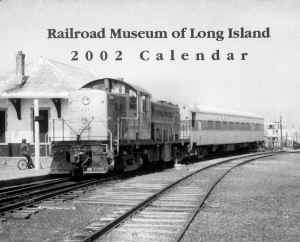
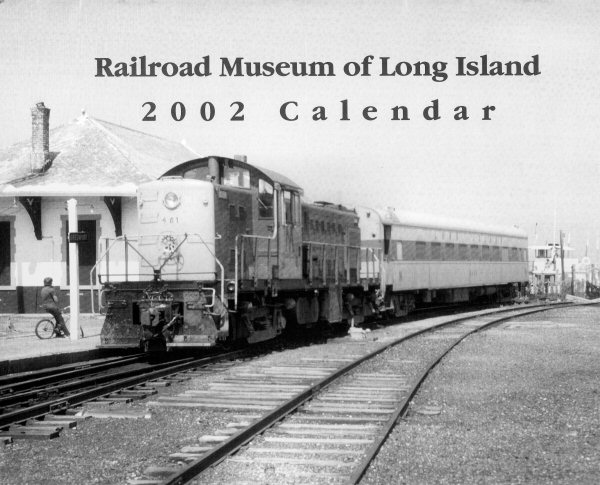
Our first diesel cover
shot features Alco RS-1 #461 handling the one-car "Greenport
Scoot" during the Summer of 1973. Built in December of 1948, the 461
was one of nine owned by the LIRR. Note the tracks leading to the dock
behind the train, which have been blocked off. While not what the builders
of the line envisioned 150 years ago, Greenport still sees passenger service
today, and the passenger station pictured now serves as a Maritime Museum.
The Railroad Museum of Long Island's Greenport museum is located at the west
end of the station area, in the old freight house/ Photo: F. R. Dirkes,
Collection: Railroad Museum of Long Island
|
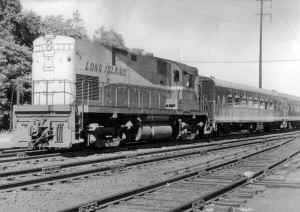
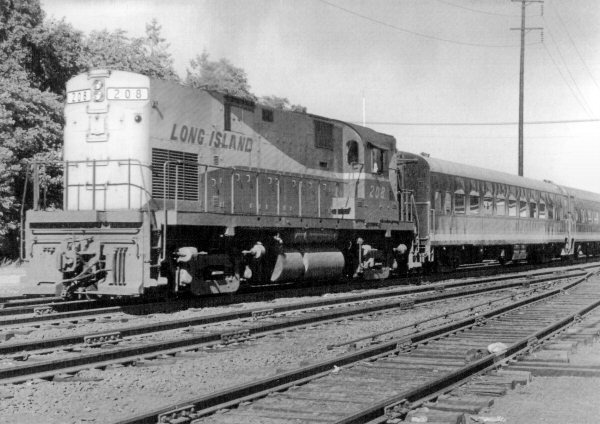
Seeking replacements
for their heavyweight parlor cars, the LIRR turned to many railroads which
were exiting the passenger railroad business, and acquired many cars at
surplus prices. Some of the colorful cars were those purchased from the Kansas
City Southern, which were black with multi-colored striping at the bottom.
Here we see a string of the coaches, pulled by Alco C420 #208. The train is
a westbound Montauk train and the scene is Islip in 1968. Photo: J.P.
Krzenski,
Collection: Railroad Museum of Long Island
|
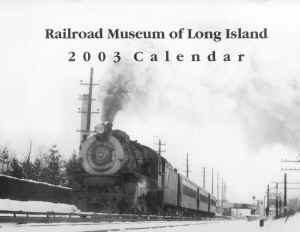
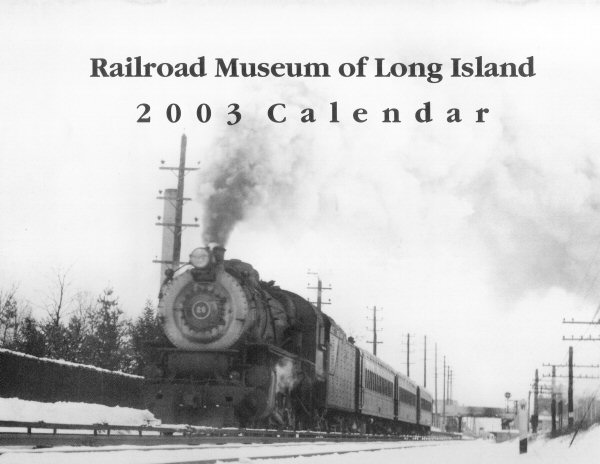
LIRR G5s #26 is seen
storming west out of Mineola on
Train No. 4223 November 27th, 1938.
Archive: RMLI |
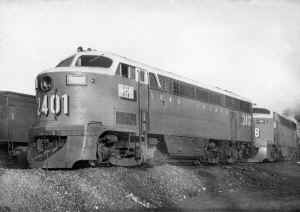
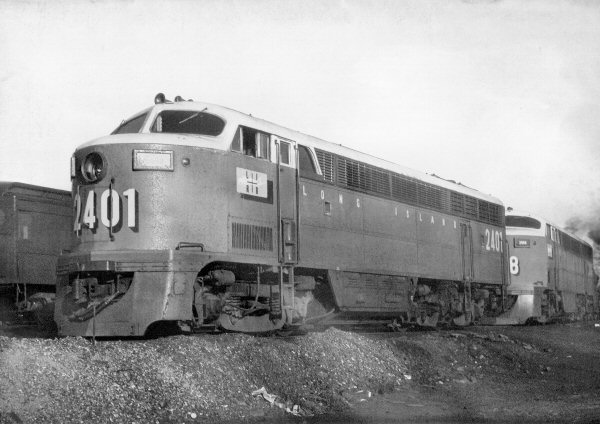
Although the LIRR
retired their last steam engines in 1955, steam had already taken a back
seat on many branches. Evidence of this is seen in this photos of Port
Jefferson yard, where two new Fairbanks Morse C-Liners await their next
assignment, with a steam engine in the background to be used as a backup for
the "new kids on the block". Archive: RMLI |
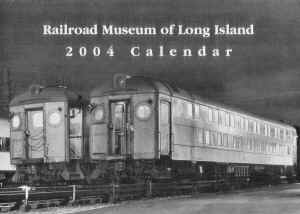
Shortly before their
retirement, double-decker #1305 and one of her sisters await their next
assignment for the morning rush in the Babylon coach yards, c.1970. Photo:
Vincent Alvino
|
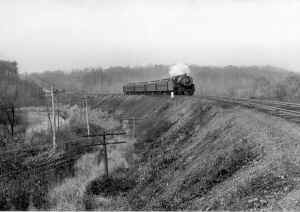
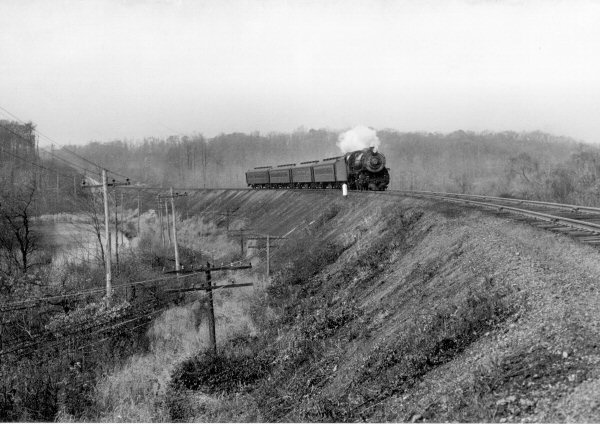
The Oyster Bay branch
has always been a quaint little branch meandering through the various towns
on Long Island's north shore. Until their retirement, the branch was almost
the exclusive domain of the G5s Ten Wheelers. Pictured is a G5s with a four
car consist through Mill Neck. Archive: RMLI |
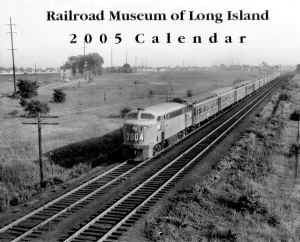
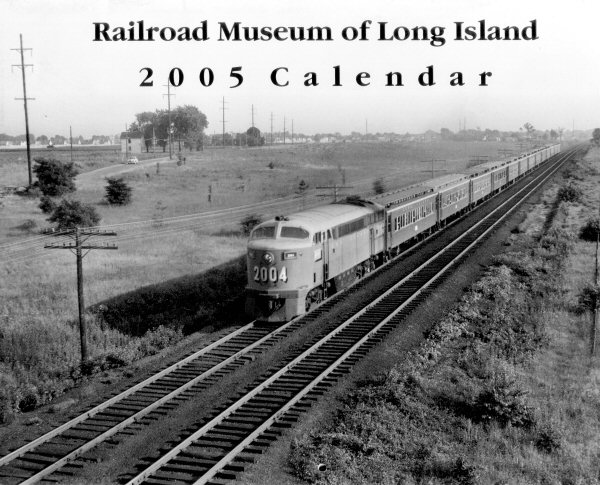
FM CPA20-5 #2004 and train railroad eastbound (tracks actually ran
northbound at this point) on the Port Jefferson branch between Hicksville
and Syosset, approaching the Northern State Parkway overpass from which the
photo was taken looking SE (railroad west) on July 10, 1953. Miller
Road/Place is off to the left. (George E. Votava photo, Dave Keller archive) |
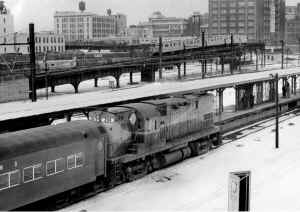
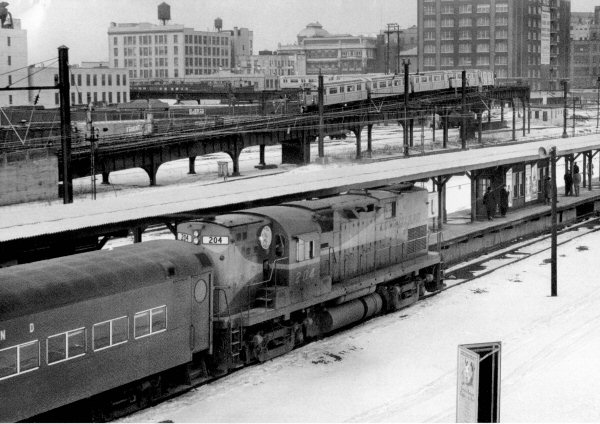
Hunterspoint Avenue is
the site of this busy railroading scene. Alco C420 #204 is pulling a train
into the station for point east. Behind that, the IRT Flushing Line can be
seen with a New York bound train. World's Fair colors are still evident on
the C420 and the subway train. Just behind the subway trestle are freight
cars on the lead tracks to the LI City float bridges.
Photo: Vincent Alvino
|
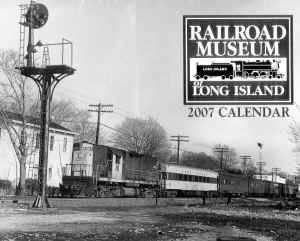
On Thanksgiving in
1970, Alco C420 #215 and her train lay over in Patchogue awaiting their next
assignment. Big changes have occurred in Patchogue this year with a new
signaling project, and the position light pictured is one of the causalities.
The most noticeable change however is located one block west of the
photographer, where the venerable PD Tower has been decommissioned.
Collection: J. P. Krzenski
|
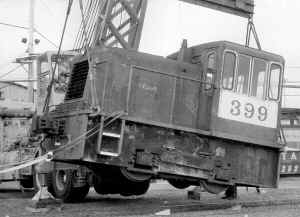
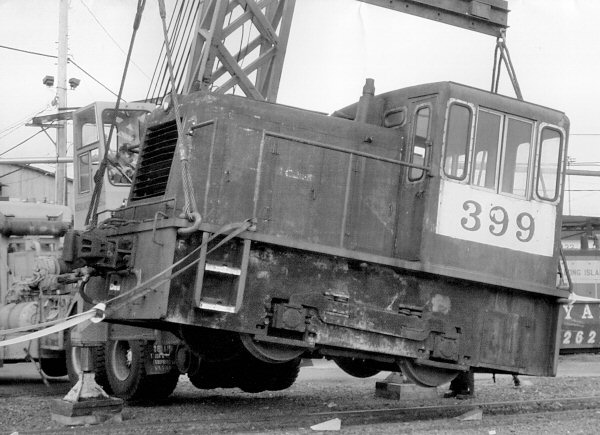
On the day that RMLI
acquired Dinky #399, the LIRR wreck crew and the LIRR wreck crane raise #399
off the tracks in order for a low-boy trailer to position itself under
the locomotive for the trip out to Riverhead and her new home at the Railroad Museum of Long Island.
Location: Morris Park on December 19, 2005.
Photo: Richard Gorddard
|
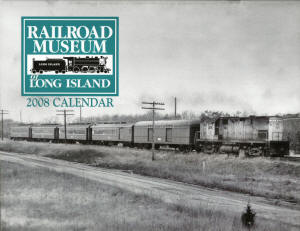
Speeding along the Montauk Branch, eastbound C420 no.205 leads a baggage
car, combine and three other ping-pong coaches to keep her schedule to
Montauk in March, 1971.
Photo: Vincent Alvino Archive: RMLI |
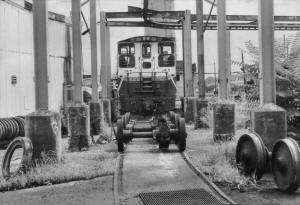
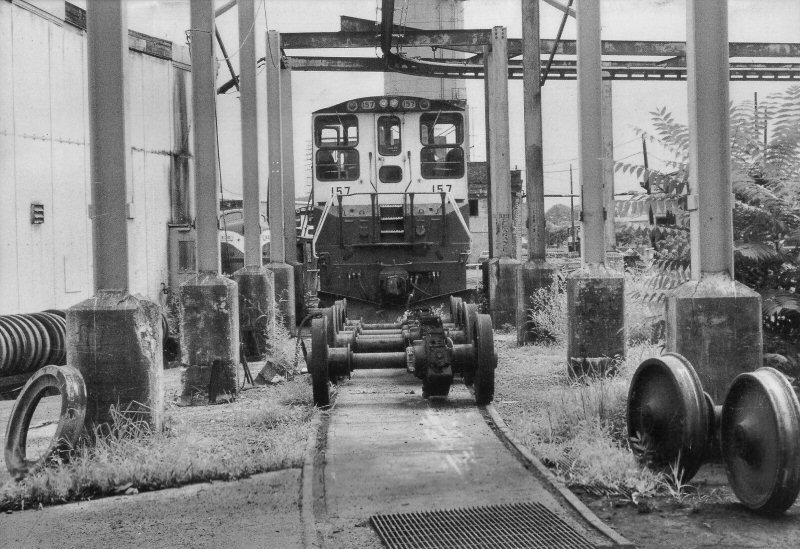
Posing in a lonely spot in the LIRR Morris Park Yard in August, 1984, MP15AC
no. 157 waits for her next assignment. The steel beams pictured were a part
of the old Morris Park roundhouse, which was cut back to five bays in
October, 1971.
Photo/Archive: Richard Gorddard |