|
West Side Freight: Milk Plants
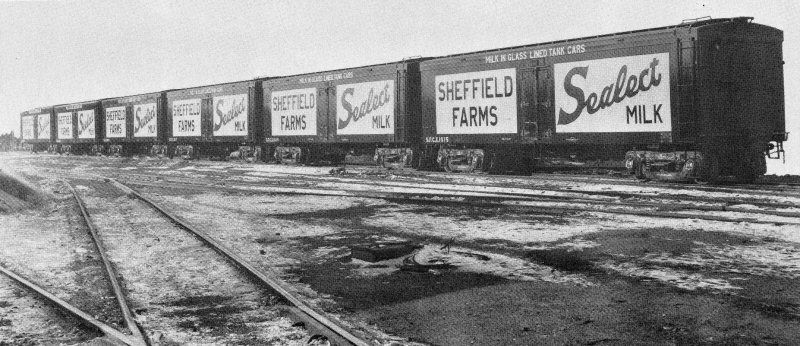
Sheffield Farms opened a plant adjoining its
company's headquarters at 524 W. 57th St. in 1938. Here is a quote from the
article on the new plant in the June 22, 1938 The American Produce Review.
"The new plant, adjoining the company's headquarters at 524 West 57th
St., spans the tracks of the New York Central which run below street level
from the 60th St. yards to 35th St. between Tenth and Eleventh Aves. The
tracks were laid in a cut a year ago, removing the railroad from Eleventh
Ave."
"Relocation of the railroad enabled the company to build on this site
and obtain the long sought rail terminal within the plant. First, however,
the dairy and the railroad made an unusual real estate deal by which the
railroad maintains a right of way through the plant and the dairy owns the
air rights above the tracks."
"The new plant is the only milk plant in Manhattan and the second in
New York City to have a railroad siding on plant property. The other plant,
also built by Sheffield Farms, is in Jamaica. It was opened a year ago. The
rail head in the plant saves the time and expense involved in hauling milk
from railroad yards in tank trucks."
LIRR to remove contaminants from soil at 7 sites
NEWSDAY
-
Updated March 4, 2015 8:26 PM By EMILY C. DOOLEY

LIRR workers mark and prepare an area for excavation to
determine and address levels of mercury at the
Babylon Yard Substation in January 2004. Photo Credit: LIRR
The Long Island Rail Road will excavate more
than 4,750 tons of contaminated soil at seven substations in Queens and
Nassau County this year and into early 2016 to remove mercury, lead and
other toxins.
The work is part of an $11 million capital plan program the LIRR started in
2010 to clean up 20 sites from Shea Stadium to Babylon.
The contamination dates back to the early
1930s through 1951, when the LIRR used tubs of mercury at substations to
help convert alternating current into direct current to power locomotive
and passenger cars.
The rectifiers that converted the power were
removed in the 1980s and replaced, but the contamination remained.
The new cleanup was prompted when a worker
saw mercury beads in the corner of a building in the late 1990s, said Andrew
Wilson, LIRR director of the Department of Program Management.
"It was just poor
housekeeping," Wilson said of the contamination. The LIRR conducted
environmental investigations between 1999 and 2000 and agreed in the
2000s with the state Department of Environmental Conservation to enter a
voluntary cleanup program.
Remediation consists mainly of soil
excavation. "Mercury doesn't like to travel too far," Wilson said.
The element occurs naturally, and most common
exposures come from eating contaminated fish or shellfish. High exposures
can damage the nervous system, brain, heart, kidneys, lungs and immune
system, according to the U.S. Environmental Protection Agency.
"It's a dangerous chemical, but it can
be remediated," said Adrienne Esposito, executive director of Citizens
Campaign for the Environment, based in Farmingdale.
Ten sites have already been cleaned up. On
deck are substations at Shea Stadium, Kew Gardens, Port Washington,
Manhasset, Valley Stream, Island Park and Hempstead.
The DEC comment period on the plans in
Hempstead, Island Park, Valley Stream and Manhasset have ended. Once DEC
approves a work plan, the LIRR can begin. Each site should take about four
weeks to remediate, Wilson said.
Prior investigations found varying levels of
contaminants. At Hempstead a hot spot showed 17.6 milligrams per kilogram of
mercury, while the industrial safety standard is 5.7 milligrams per
kilogram.
When the work
is completed by early 2016, an estimated 3,800 cubic yards of contaminated
soil will be removed. That amount is equivalent to about 2,065 Toyota
4Runners.
By 2018 the final three sites in Bayside, Cedar Manor and Far Rockaway
should be completed, Wilson said.
Groundwater contamination has not been found at any of the sites, and rail
traffic should not be affected.
The sites are all fenced off or at right-of-ways not open to
public, LIRR spokesman Salvatore Arena said.
"Most of these LIRR sites have very limited access due to the nature of the
site activities," DEC said. "The cleanups are consistent with industrial or
commercial use of these properties, with consideration of the surrounding
land use."
The contaminated soil will be trucked away to a permitted off-site facility
in tarp-covered trucks, and equipment will be decontaminated.
A point of view: The Truth behind the many Shops
that are now demolished in Morris Park, Richmond Hill, New York
by Mike
DeFantis
Retired L.I.R.R. M of E Gangforeman 1971 to 1999
From growing up across the street near
Atlantic Avenue and playing on the baseball field for the Richmond Hill
Saxons "B" team at Smokey Park as a youth to running the night
shift at the Engine House in Morris Park as an adult, I've seen it all
firsthand so it seems looking back. Living on 95th Ave. and 127th street in
Richmond Hill in 1955 then moving up a few blocks to 101st ave in later
years, I first saw a glimpse at the age of nine the Long Island Rail yards
across Atlantic Ave when seen from the parks handball courts. One would find
out very quickly when trying to theorize the reason the park was nicknamed
Smokey Park. On June 27th 2008 the park has been renamed to The
Phil Rizzuto Park, after the New York Yankee Hall of Famer. Rizzuto also
attended Richmond Hill High school while still in his youth just like my
older brother did, the only exception is Rizzuto graduated.
The old neighborhood has changed on my last visit cruising
the old neighborhood, just like most of the neighborhoods in New York City
that have all changed the ethnicity to something different then we were part
of the fabric of our own community. Predominately Indian now, the local
stores reflect the culture change. From the time that this park opened in
1938, it has been known locally as Smokey Oval Park. In 1987, The NYC Parks
Department officially named it Smokey Oval. The name refers to the park’s
location, across from a Long Island Railroad terminus which once made it a
landing area of soot and ash from the railway smoke. It is also inspired by
the oval-shaped mound at the front of the park. Before the park was
constructed, 126th Street and 94th Avenue ran through the parkland in the
typical grid pattern. These roadways were closed off to provide for a large
open recreational area. In 1944, a strip of the playground’s land,
approximately 40 feet long, was deducted from the original acreage by local
law to allow for the widening of Atlantic Avenue.
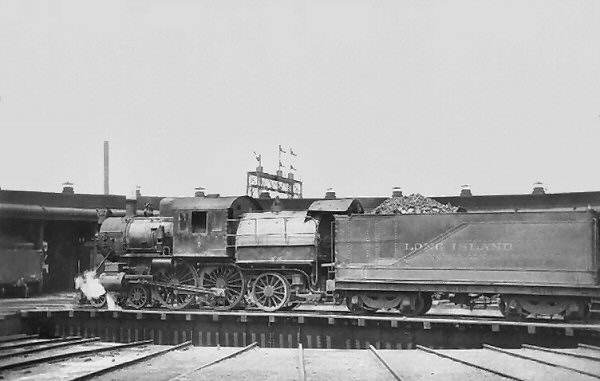
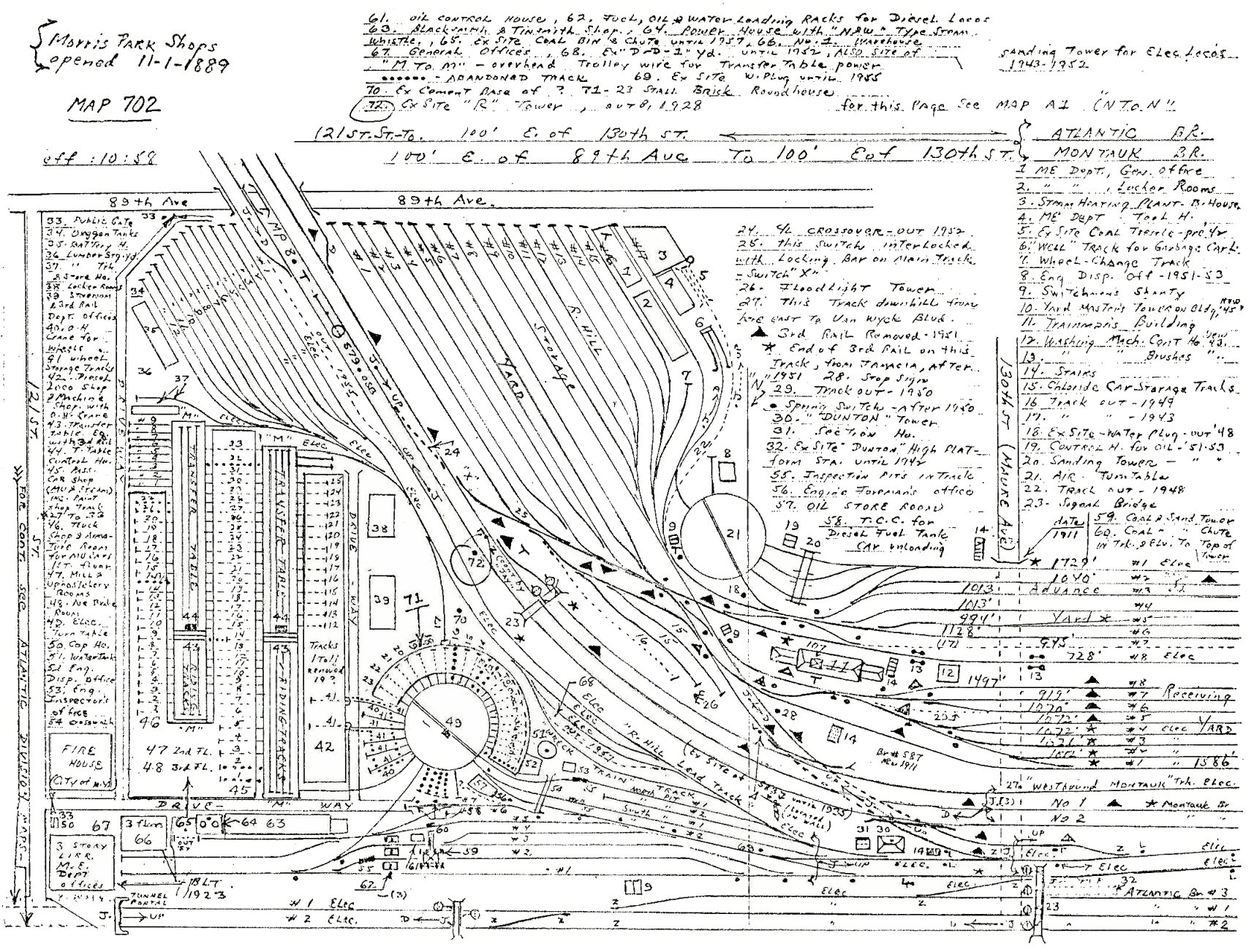
The Shops in Morris Park: I feel today in thinking why
nothing has been done yet to my knowledge is that just because
"they" demolished the shops and they built new ones located east
of Jamaica Station at the former Gertz Warehouse location near Holban Yards
that this would hopefully all go away as far as what’s in the soil, and
who remembers how it got there.
However the history that is
still fresh in my thoughts some fifteen years in my own retirement as my
railroading begins as I started in March of 1971 as it surely feels like it
was only yesterday when I saw firsthand what I will now state. I have no
reason to make up anything in this story, especially those who have passed
on since we first crossed paths as our employment caused our paths to cross
in our individual own railroad carriers.
Those like me who remember what we saw and it’s all
factual, realize that in many cases the health issues that
followed factually had to have killed employees in years following
employment. The slow deaths had reasons as to why the various diseases hit,
but no one ever looked into this to my knowledge in investigating the
history of working in what many believe today were in fact unhealthy shops.
They were because in today's standards they would be defined as being
extremely hazardous. The other point would be why overspend by a few
hundred millions dollars in building new Maintenance and
overhaul Complex, then after the grand opening in July of 1991 they
demolished those that were vacated?
Could it be that the Federal Government and the State
Government pressured the MTA\LIRR officials, you better start thinking about
providing a better healthier work environment for your employees, or else?.
In my opinion if the LIRR was in any other business other
than providing transportation for over 250,000 commuters daily, they would
have been shut down in a heartbeat, no question in my mind. So the work
around was to get funding and build new shops, it took a few years but they
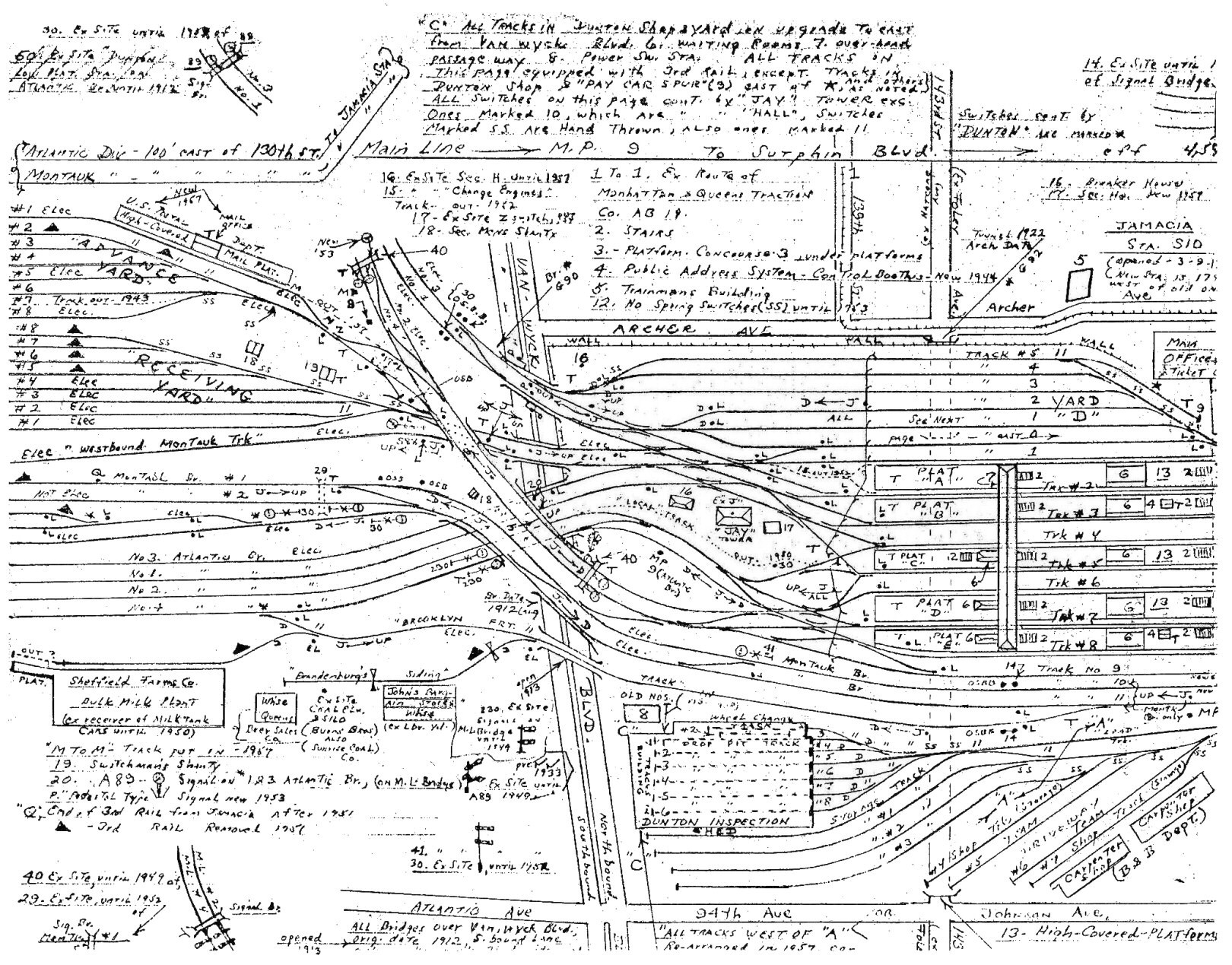
did it. The demolishing of most of the Morris Parks buildings and the Dunton
Shop were bulldozed, but they forget what is still in the soil.
There is a small story behind who went ahead in having the
many buildings demolished without the higher ups approving the demolishing
projects, and he was set free in his employment once they investigated. You
cannot resurrect the buildings but the foundations are fresh in many retiree’s
minds in who worked in those buildings for most of their thirty or more
years of employment. Photos will resurrect anyone's thoughts in what those
buildings housed especially if you worked in them like myself and the
thousands of others that did.
Asbestos was a huge problem in
our daily work even though the product was no longer being used heading into
the 1980's. We actually used work gloves that were made of Asbestos, and
used them for years when handling hot metal parts. I had once years ago kept
a list of people who had passed on since I started keeping records for a web
site that I once ran and recall those former coworkers that I remembered as
far back as 1971. Sadly that data is all gone when the system failed that
kept those records. As I progressed in keeping the list and the years slowly
passed it was unbelievable in how big the list I was looking at was getting.
I knew most of those who were on it, it was astounding.
Back in those days just about everyone smoked, and if
lung cancer hit and when seeking monetary recourse in suing the L.I.R.R.,
the first question would be on the other side of the table; ”have you ever
smoked?, and what about you Mom and Dad? Oh here is one, how about Grandma
when she was giving you a bath?” it was a joke in trying to dissuade the
accuser that are you sure you didn't get this dreadful disease elsewhere?
All they had to do was to put a
doubt in the plaintiffs head, and the cases were settled enough to take your
bride on a small cruise around the Statue of Liberty in New York Harbor.
Some might have gotten a few dollars more in the settlements as they headed
to Wally World in Orlando for that dream vacation.
To my knowledge no one ever won a major multi-million dollar
suit against the L.I.R.R. for lung cancer or any other health issues that
could be directed as the cause as the result of you working in an unhealthy
work environment. And if they did they surely kept it quite. I recall that a
couple of Machinist sued, it was in the newspapers, I knew one of them and
they were awarded a few million each, and after the railroad appealed, they
got enough for a cup of coffee and that was it. It was years of litigation,
and “they” out waited the accusers. That signals to the next accusers
that were lining up; “Don’t try it fella! Here’s the proof!”
However many settled for ten thousand to twenty thousand that
it would have cost in legal fees just for the L.I.R.R. to defend the cases.
Most all took what was offered and the attorneys representing also pressured
you too and took their cut first more like a third of the settlement. All
who eventually stood their ground and fought for the pennies offered had to
sign confidential agreements and couldn't talk about it after reaching these
agreements. Most of those must be all dead now, but I do recall those who
spoke about their individual cases one on one, and there were plenty.
I knew of a many former coworkers who died from
pancreatic cancers, lung cancers and skin cancers. The shops I worked in
were heavily contaminated from just about every form of product from
cleaning fluids to toxic chemicals that are banned in today’s working
industrial world. The air we breathed was also filled with airborne
impurities. To prove my point simply blow your nose after leaving the
property and see visually what your handkerchief is holding, and
compare it today many years after you retired, a big difference I would
say.
The ceiling and floors in all
the shops had dust particles which were filled with asbestos when the former
rolling stock in years prior were being worked on. Even though Asbestos was
phased out, it lined our radiators and shop heating pipes in the winter, and
lay dormant on crane overpasses and running rails throughout all the shops.
The open air swirling when the doors were opened in the extreme summer
conditions moved the particles in every way imaginable, falling on your
lunch and drink as you digested your food as the percentages had to be great
that this was happening all the time. With reference to The Electric Car
Shop and the Car Shops etc., we had no lunchroom. The Diesel Shop did have
one behind the Round House nicked named the Welfare Building. The back wall
of the lunchroom had eight foot high skids of batteries stacked.
From earlier years when asbestos lined and were used
extensively in the wiring and insulations of the running rail stock those
particles were still in those shops long after they were put into the scrap
yards. What about the brake shoes used in the early years? The shops were
never abated, they were painted once that I recall, and I feel sorry now for
what the hired painters inhaled. So they were simply demolished a few years
after the 1991 move to Hillside. On just about every work day in the course
of my own responsibilities in cleaning the shop was to have the
laborers empty all the garbage containers in the shop and the locker
room balcony and broom sweep the floors. Can you imagine this fact that our
locker room was open aired above the shop floor of the Armature Room and
your street clothes were dangling on a hook or hangar in your vented locker?
You don’t think that any of those particles found their way home? One
would visually see afterwards the shops was much cleaner than when we found
it at the beginning of the shift, and a big difference one would see when we
locked up and went home at 11:30pm. I did this for seventeen years before
the shops closed in July of 1991. But what we failed to realize then is
that the broom sweeping the shop floors raised more airborne
particles that we didn't realize we were contaminating the very air we
were all breathing and the food we were eating a lunchtime. Was that stupid
or what?
One would also wonder in those many residents
individual homes that lived along 121st street off Atlantic Ave with back
yards backed up to the Rail yards and shops in Morris Park. In how those
residents survived and how they fared health wise overall. It had to effect
those equally in causing health issues that otherwise if they didn't live
near the shop atmosphere that we all lived in for our eight hours tour.
Another unhealthy fact, the second floor Battery shop had a ventilation fans
running 24/7/365. The exhaust fans were evacuating the battery gases from
the batteries being charged. The gases were directed and vented to the
backyards of the NYC Fire department building near the main gate entrance
and to the yards and those houses which backed up to the shop building, less
than twenty feet away. The fireman at various times barbequed on the grills
in the back of the firehouse, what were they ingesting, simply mind numbing
just in thought but that’s a fact.
The Morris Park Diesels Shop
lay-up tracks along Atlantic Avenue that has been used for over a hundred
years as every type of locomotive engines from coal fired to electric to
diesel sit idle in some cases 24/7 until they are assigned job assignments
were tested around 1995 or 1996, I seen it firsthand working the Engine
House Desk.
The L.I.R.R. hired an outside company to test the soil in the
yard. I believe the EPA mandated it, if it was on the local or federal level
I do not know. They bore down in multiple locations places in the yard to
get core samples, they did this mostly at night as to not upset the day
workers in asking "what was going on". The rigs looked like
equipment towers used for drilling for a water wells, they were tall as I
recall.
The Morris Park Yard the
findings came back when they completed these test and it was so bad that the
area should be designated as a Super Fund site and that federal funds were
most likely needed to fix this mess. The contaminates which have accumulated
for over a hundred years which included coal ash, oil and diesel by products
including fuel, glycol and various leaks on from every type of equipment you
can imagine had filtered into the soil so deep it was leaching into the
water table below the yard. The fix and the cost estimates then were to
erect towers and bulldoze the soil into the towers and the soil would be
burnt in high heat chambers thus burning off contaminates in the soil and
then the soil would then be reintroduced back into the yard relatively safe.
Well that was the plan......
The cost estimates then
as I recall was roughly forty million, however that would only cover the top
ten feet or so of top soil, so do the math in today's world monetarily and
at what depth you had to dig to rectify the contamination you would have to
recalculate these initial estimates. The core samples report came back as
being contaminated down to nearly forty feet in some areas of the yard. To
my knowledge nothing was ever done to this date to rectify the soil and
contaminates in the yard. The other areas of interests is where once the
shops once stood are most likely are sitting at equal or worse levels of
soil contamination.
For the years I worked in
Morris Park starting in 1971 I had witnessed some amazing cases of simply
dumping fluids and liquids into the soil that lined the transfer tables in
the Car Shop and Electric Car. From flushing acid tanks weekly on the third
floor Airbrake Shop with a drain pipe running down the exterior of the
building walls directly into the soil in the transfer pit to dumping Air
Condition refrigerants directly into the pits in evacuating A\C units being
worked on. In later years they recovered the refrigerant but not in the
early 70's as the procedures were changed in later years. How about openly
spray painting coach cars interior and exterior to locomotives in open aired
environments. The painter wore his protection a simple particle mask, that
could be used as a mister coffee filter, and it was and they were, but what
about everyone else? Boy was this stupid.
The Fuel lines that ran from
Upper Richmond Hill yard down into Morris Park and the Fuel Dock had leaks.
The buried holding tank in itself up in Richmond Hill probably and must have
been installed in the early 20's was also leaking. After the New Richmond
Hill shop was built they removed and replaced the leaky system. The old Oil
House in Morris Park near the turn table was leveled and the oil tank
platform was used to house the new Fuel Tanks and the delivery system. Need
we forget the ground soil in all of the above items could be and should be
considered contaminated?
The Blast House
that once stood and was near and part of the Paint Shop when they stopped
sandblasting the Cars, they migrated the procedures into spraying Naval Gel
type acid to remove layers of paint off the Coach Car body's and Diesel
Locomotives bringing them down to the appearance of shiny raw metal. Once
the acid completed its job, it bubbled the paint, they simply water hosed
off the acid and it ran directly into the soil off the transfer pits. In
later years they installed containment containers, and once filled a phone
call was made and a truck would come in and pump out the filled tanks. It
was odd seeing it because we had to back the Tractor Trailer Semi onto the
transfer table and move it down and line him up near the Paint Shop. Prior
to this the damage had to have been done.
Regardless the damage has been
done and who knows if one day they will address this ecological mess. I'll
take it one step further it was and it still is an ecological disaster just
sitting idle, god only know what impact it has already taken because it
actually did happen those many years ago. At any case it will take millions
and possibly billions of dollars to rectify what took many years of work to
accomplish starting in 1889. How stupid were we across the board and at
every level of management, and you could only imagine who will they place
the blame on? It could be defined in how much it will cost to fix.....long
after what was initially done.
What Newspapers and other media reporting the story
fail to realize when they go after people who apply for disability with
regards to the so called L.I.R.R. Pension Scams which broke in 2008 by the
New York Times is that many that were lumped unfairly into the overall scam
had factually had health issues, the ones that are in jail today obviously
were too stupid to get caught. I have no respect for those idiots who
basically bragged about what they were getting and flaunted it openly. The
doctors that signed off knew exactly what they were doing for the almighty
dollar.
As the years progressed all of those who were rejected by the
Rail Road Retirement Board in Chicago re-applied for Disability, and all
those since who have retired since the story broke in 2008, a good
percentage, more like 99.9% of those who applied or reapplied received a
disability annuity from the Chicago railroad board. So it took hundreds
of man hours and millions of dollars to prosecute, it ruined many people’s
lives unjustly who were lumped into this witch hunt, and it proved what?
Less we forget those that survived working in the unhealthiest working
environments and those that fill grave yards way too early, it’s sad,
really sad.
The five or so that are serving time in prison are simply the
scape goats you would think as the story is all but dead now, as the Federal
Attorney made a name for himself....and ironically one only has to look at
the current Social Security Disability that this country is facing. Its
hundreds of billions upon billions of waste, and yet no one is going after
those people with equal justices... It’s a crime in all of the above
issues, no one will ever be held accountable for allowing it to happen most
of those in this story are no longer walking god’s green earth. So I guess
I'm lucky so far in that I can still walk on it but remember those who
aren't. They were fabulous people that I will never forget, I miss every one
of them today as I write this short story.
What I believe in how I
survived so far as far as my own health issues, is I was always in and out
of the Shops. I walked outside quite often in the course of an eight hour
tour in every type of weather condition and maybe just maybe the fresh air
helped save me in my way of thinking.
|
 MORRIS
PARK STATION,
MORRIS
PARK STATION,
 RICHMOND
HILL AREA,
RICHMOND
HILL AREA,

.jpg)


%20-%2005-07-34%20(P.%20Sperr-Keller).jpg)
%20-%2005-07-34%20(Sperr-Keller).jpg)
%20-%2005-07-34%20(Sperr-Keller)%20(2).jpg)


.jpg)









-withWedgePlow_MPShops-c.1935_archiveDaveKeller.jpg)




.JPG)
.jpg)


.jpg)






.jpg)

.jpg)




.jpg)


