|
RAHWAY VALLEY RAILROAD News Articles |
|||
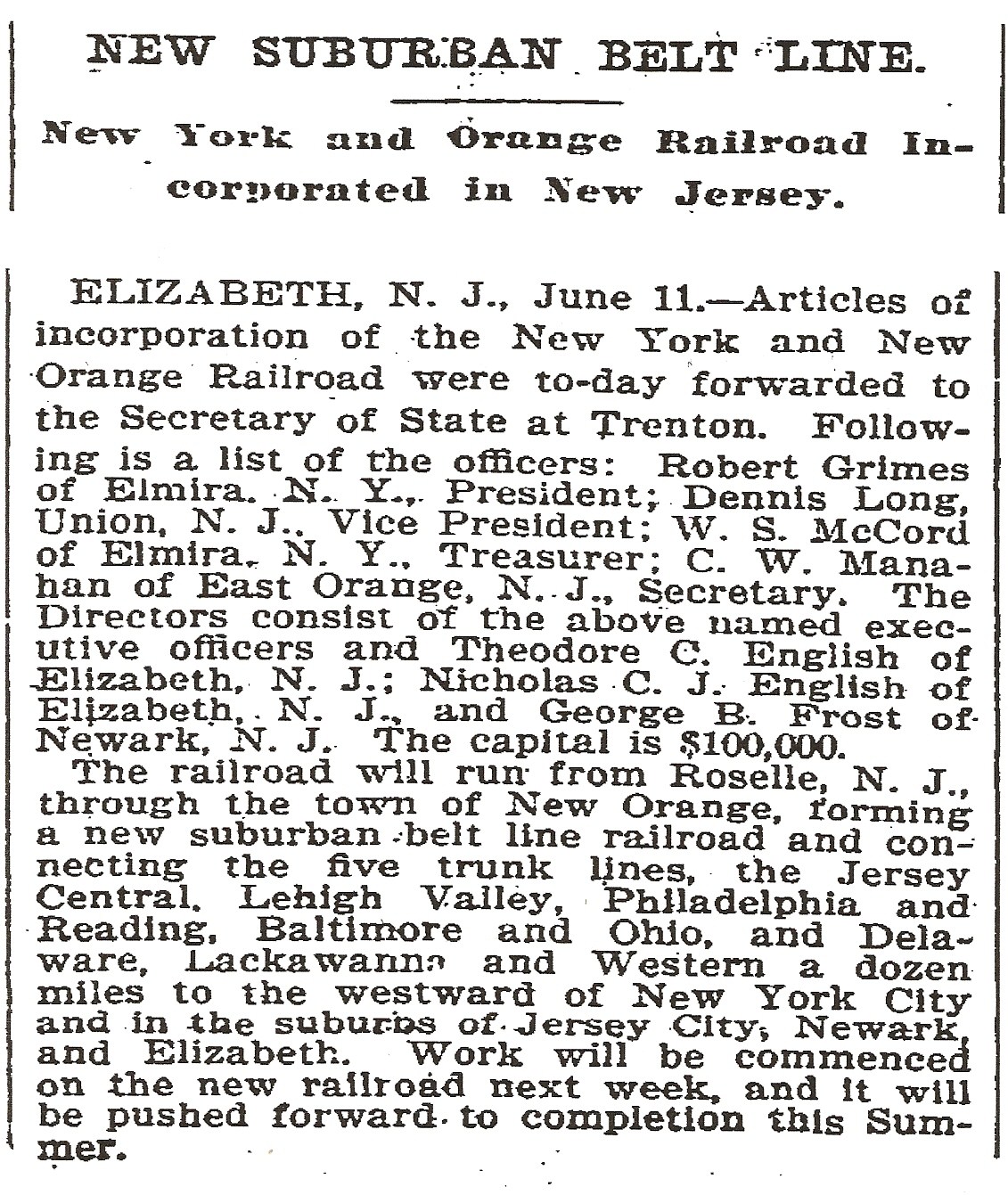
| New Surburban Belt Line NY & NO RR Incorporated in NJ NY Times June 11, 1897 | |||
|
|||
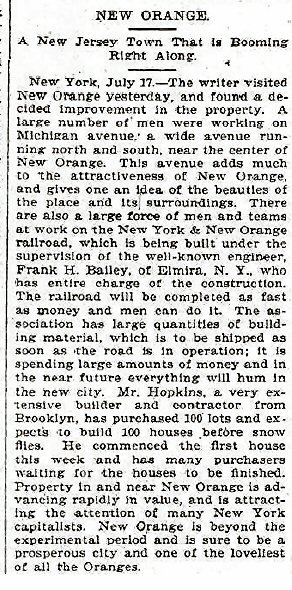
| NY & NO RR- Elmira Telegram - July 18, 1897 | |||
|
|||
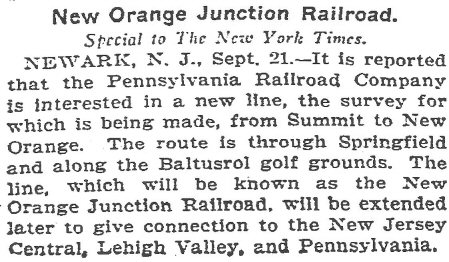
| New Orange Junction Railroad NY Times September 21, 1902 | |||
|
|||
| NY and Four Junction Railroad to Build New Railway NY Times August 9, 1903 | |||
|
|
|||
| Rahway Valley Railroad Construction 1904 | |||
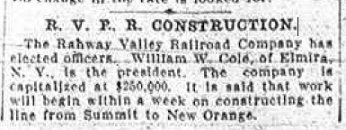 Left top: September 9, 1904, middle July 29, 1904, and bottom August 12, 1904. Right top: August 3, 1904. Research: Richard King |
|||
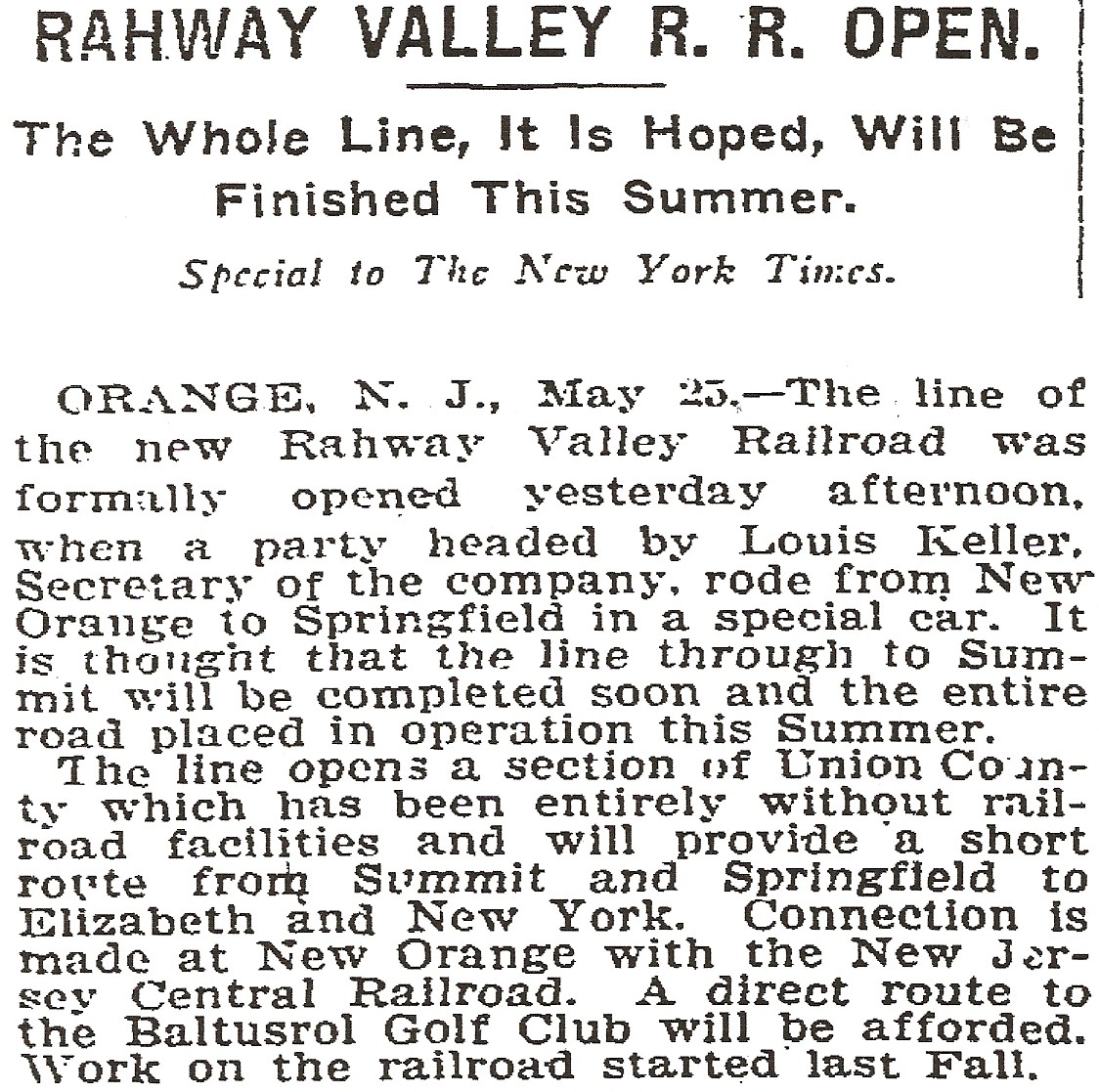
| Rahway Valley Railroad Open NY Times May 25, 1905 | |||
|
|
|||
|
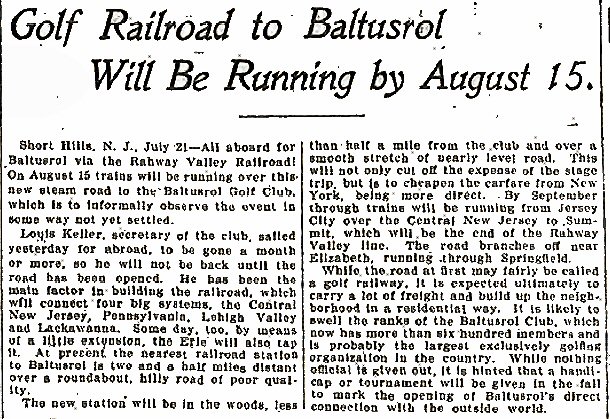
RVRR Golf Railroad to Baltusrol Brooklyn Daily Eagle July 21, 1905 |
|||
|
|
|||
|
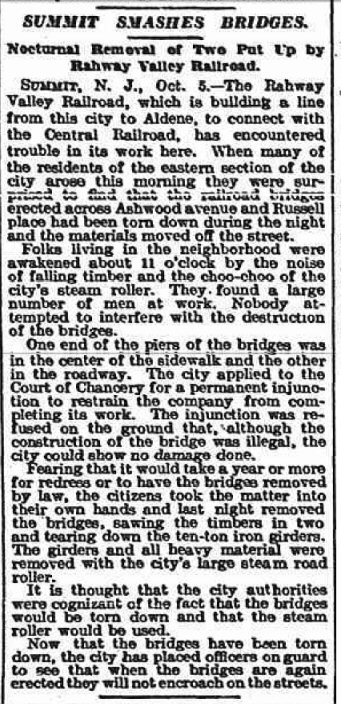
Summit Smashes Bridges The Sun October 6, 1905 |
|||
|
|
|||
|
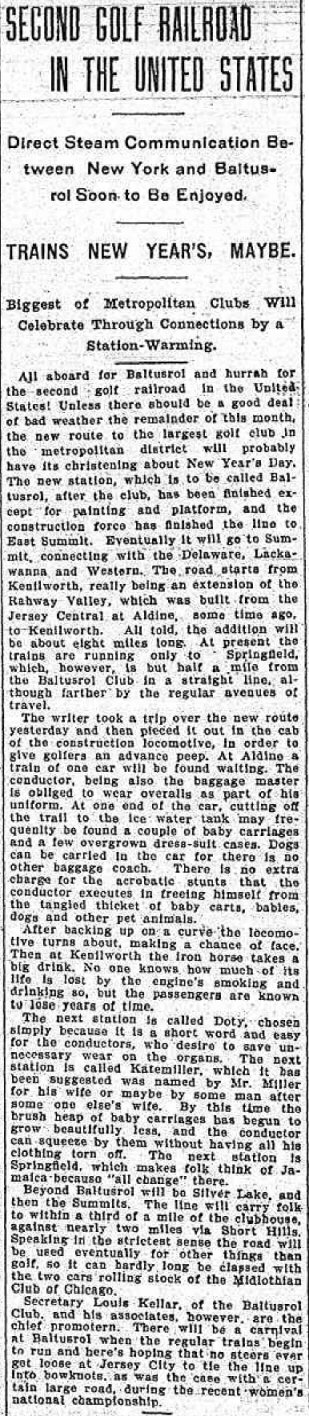
RVRR Second Golf RR in the USA Brooklyn Daily Eagle December 13, 1905 |
|||
|
|
|||
|
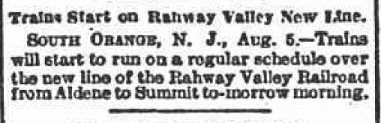
Trains Start on RVRR The Sun August 6, 1906 |
|||
|
|
|||
|
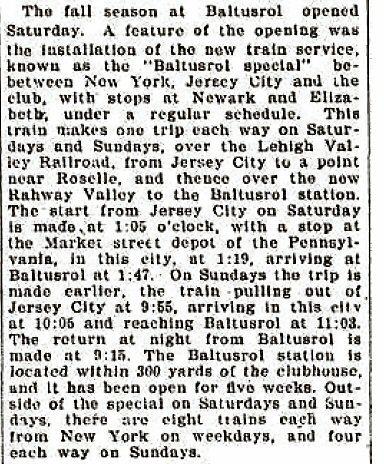
RVRR Baltusrol Special Brooklyn Daily Eagle September 15, 1906 |
|||
|
|
|||
|
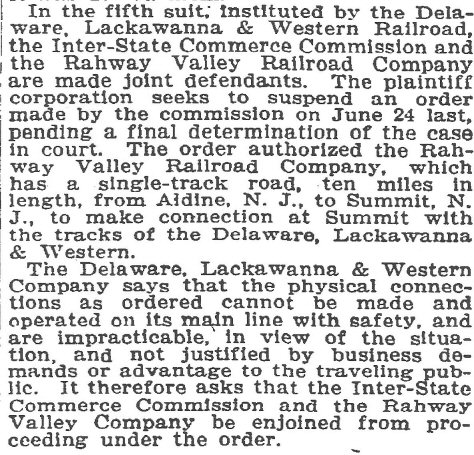
Must Build Connection August 25, 1908 |
|||
|
|
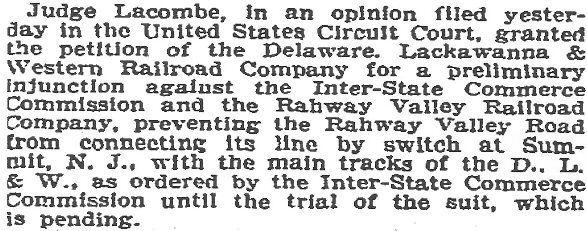
Petition Granted: October 23, 1908
|
||
|
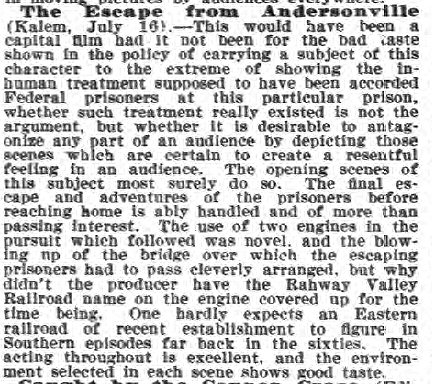
The Escape from Andersonville New York Dramatic Mirror July 16, 1909 |
|||
|
|
|||
|
No Chance to Pay Dividends The Sheboygan Journal February 26, 1912 |
|||
|
In view of the fact that it costs the Rahway Valley Railroad $25 a day to
operate and it's gross receipts are only $10, the public untilies
commission granted an increase of rates that will bring incomes and the
outgo more nearly together, says a dispatch from Summit, NJ. Communication
rates have been increased by 75 cents and fifty trip tickets $1.50 between
Kenilworth, one of the stations on the road, and Bayonne, which is reached
over the Central Railroad of New Jersey. Nobody appeared at the hearing
to make any objection.
The Rahway Valley line enjoys the reputation of being the shortest in the country. It connects Summit to Aldene at the Central Railroad, the whole road is only eight miles long. Although the communication rate is over the two roads, Central Railroad granted full increase to rates to the shorter line. H.F. Dankel is the Secretary of the Rahway Valley and owns the majority of the stock. |
|||
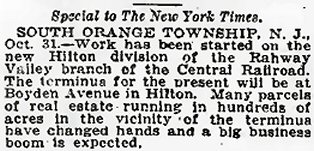
| RVRR Work Started on New Hilton Division NY Times Nov 1, 1915 | |||
|
|||
|
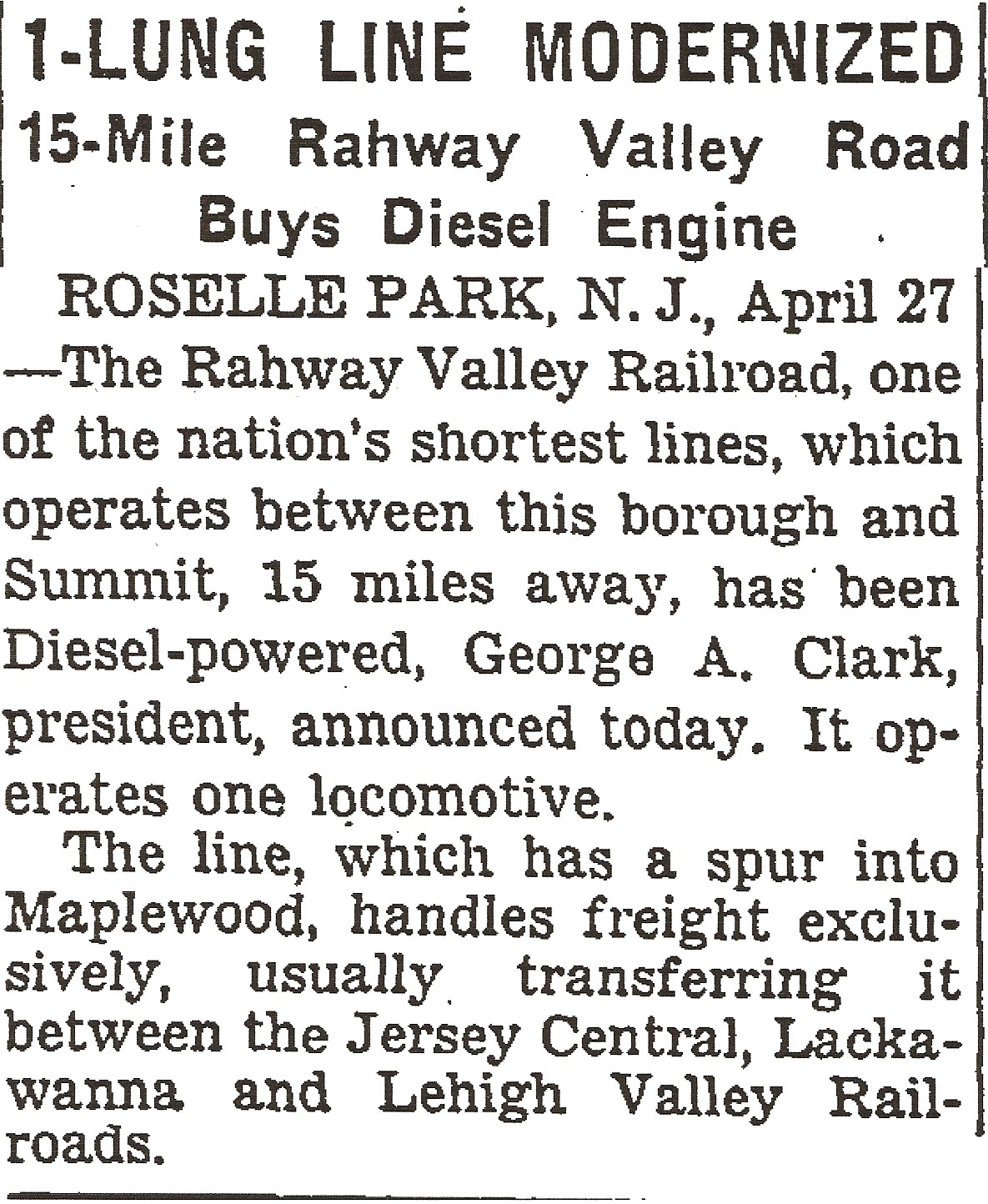
1 Lung Line Modernized 15 Mile RVRR
Buys Diesel Engine |
|||
|
|
|||
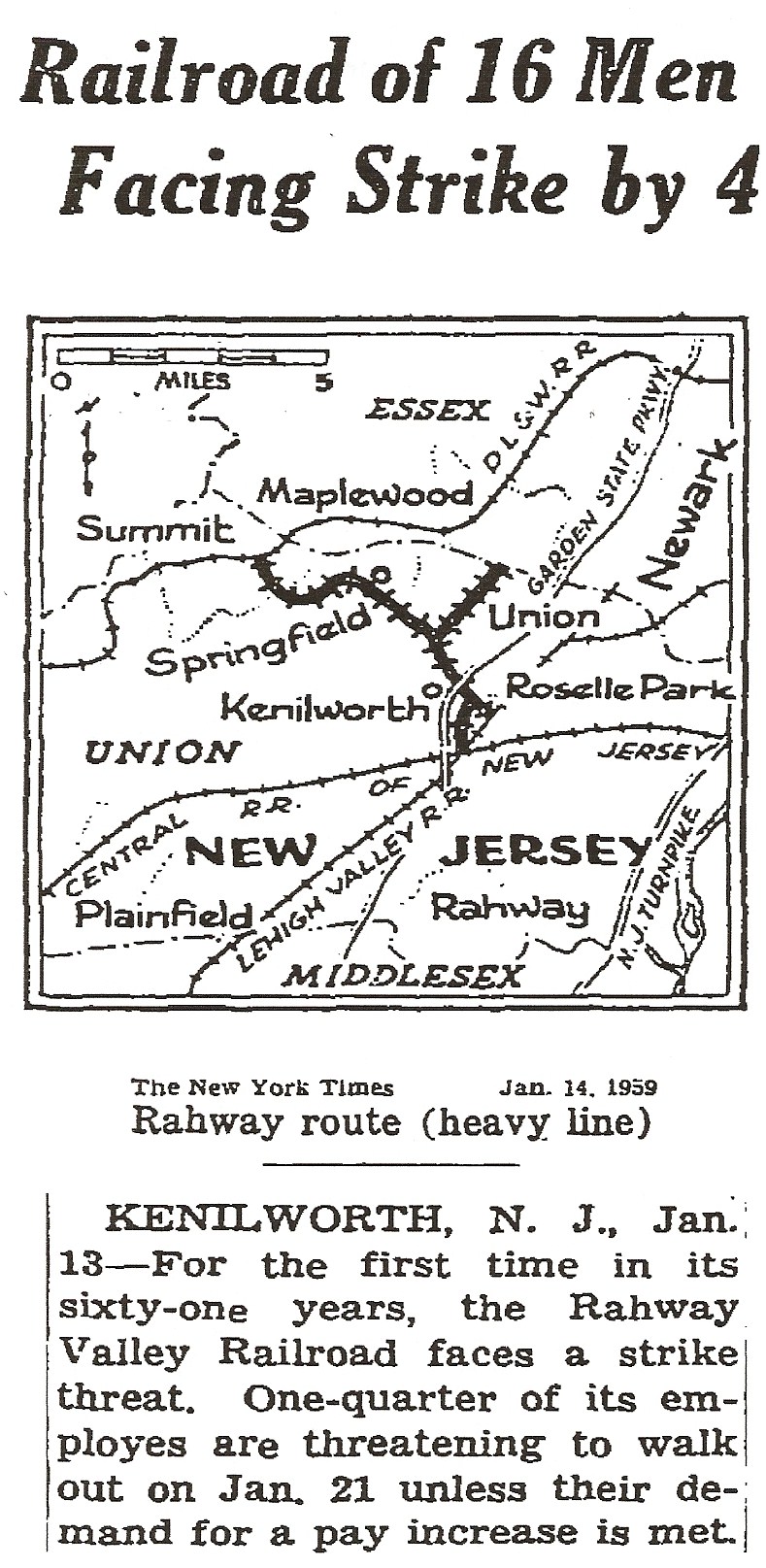
| Railroad of 16 Men Facing Strike by 4 NY Times Jan 14, 1959 | |||
|
|
|
||
|
Veteran Railroader Says 'Boys Today
Don't Know What Work Is'
by Ralph Chapman The Daily Times News
April 8, 1959
|
|||
|
KENILWORTH, N.J. (HTNS) - "Railroad men today aren't what they used to be - not by a heck of a lot." The speaker flung his six-foot-three, 235 pound frame into a groaning swivel chair and grinned sourly. This was 58 year old George A. Clark, President of the Rahway Valley Railroad, all 7.1 miles of it. |
|||
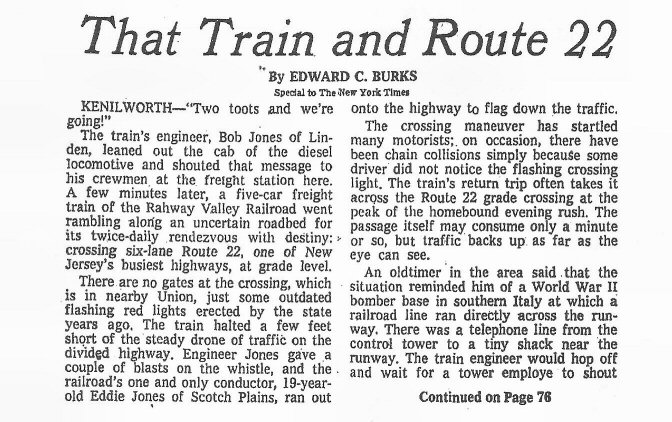
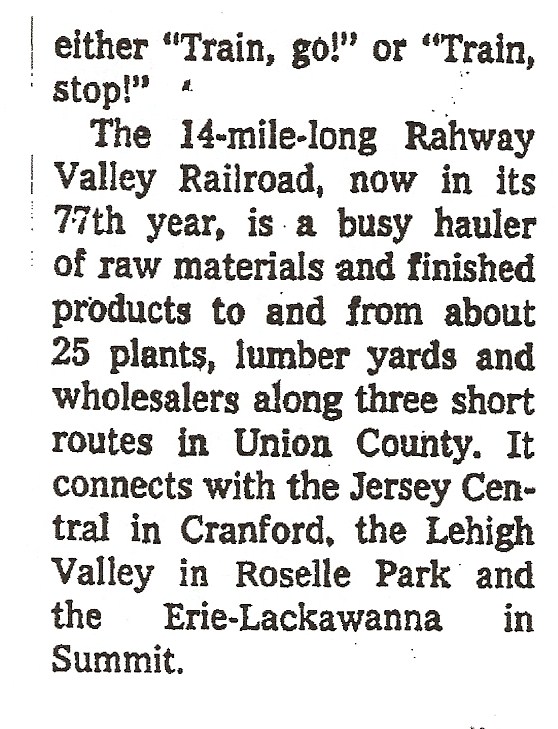
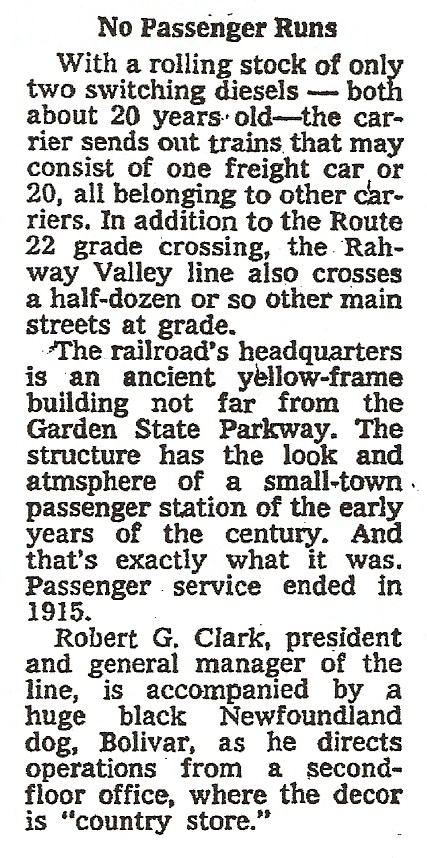
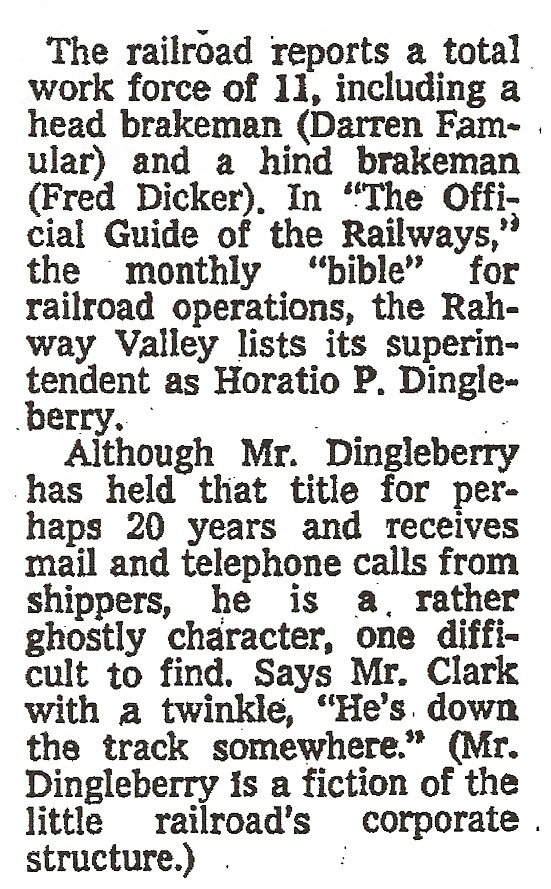
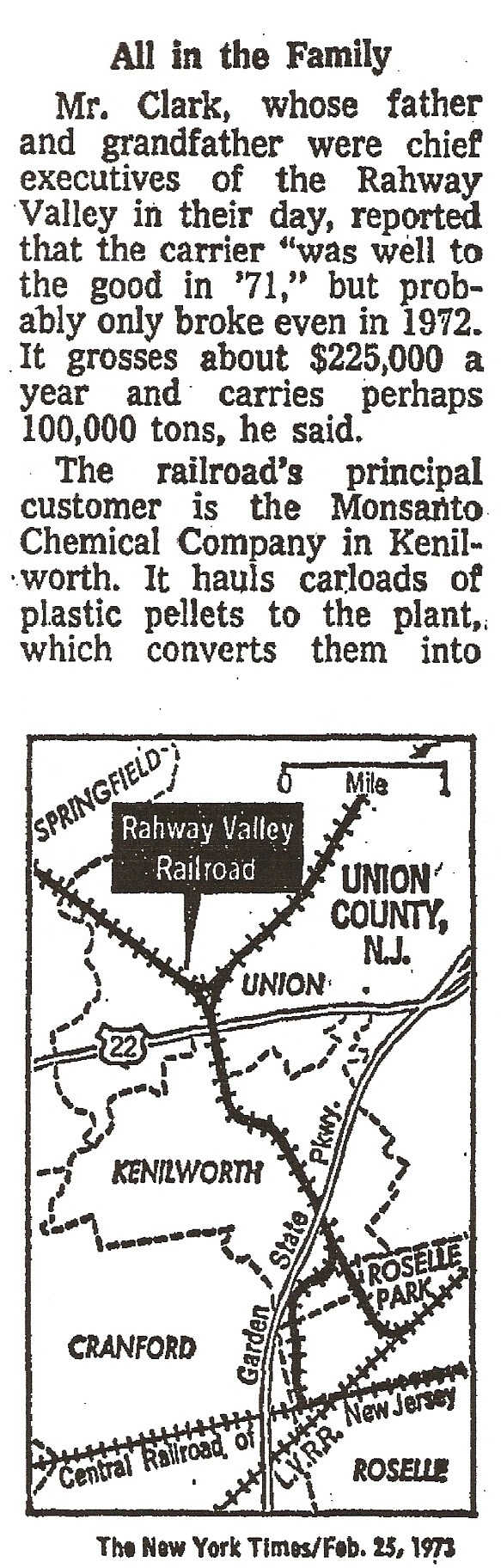
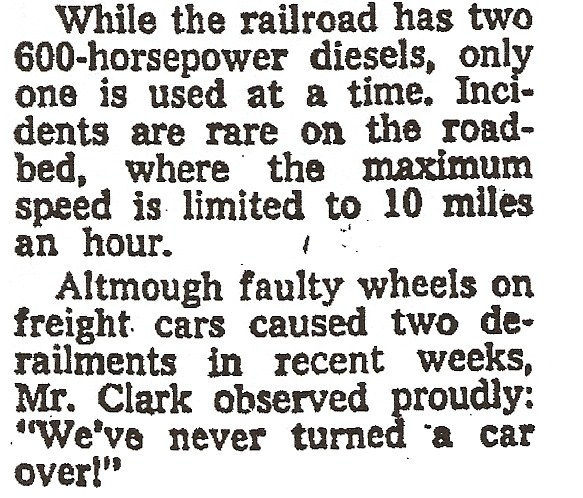
| That Train and Route 22 by Edward C Burks NY Times February 25, 1973 | |||
|
|
|||
|
|
|
|
|

|
|
|
|
RVRR Other News Items |
|||
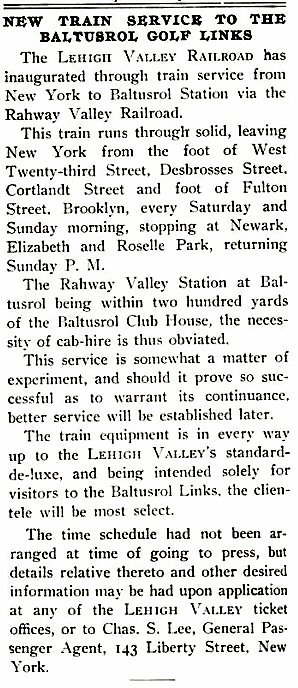 1906 Train service LV from NY City to Baltusrol, NJ |
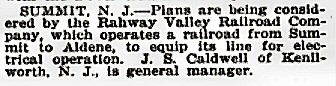 1916 Plans to equip RVRR for electrical operations. |
|
|
|
RVRR Obituaries |
|||
|
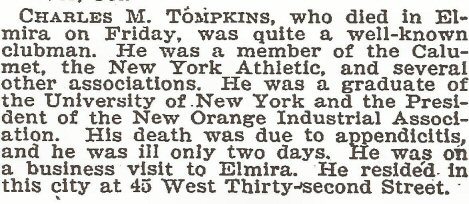
Charles M. Tompkins, President of New
Orange Industrial Association July 1, 1900 |
William C. Cole NY Times, December 20, 1915 | ||
|
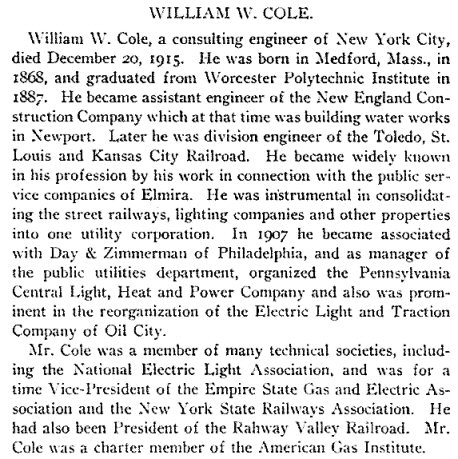 New Orange Four Junction Railroad 1901-1905 sold the struggling company to the Rahway Valley Railroad on March 1, 1905. |
||
W. W. Cole Dies by Accident The
Sun December 21, 1915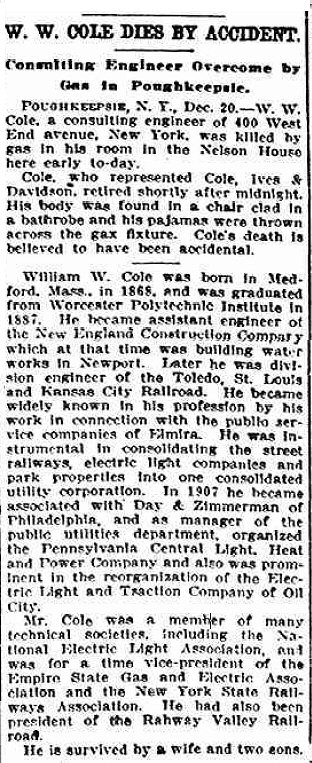
|
Nicholas C. J. English Dead Evening
Telegram May 12, 1922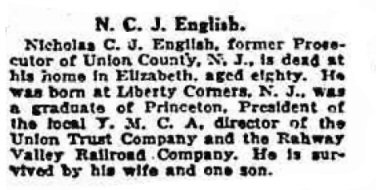
|
||
|
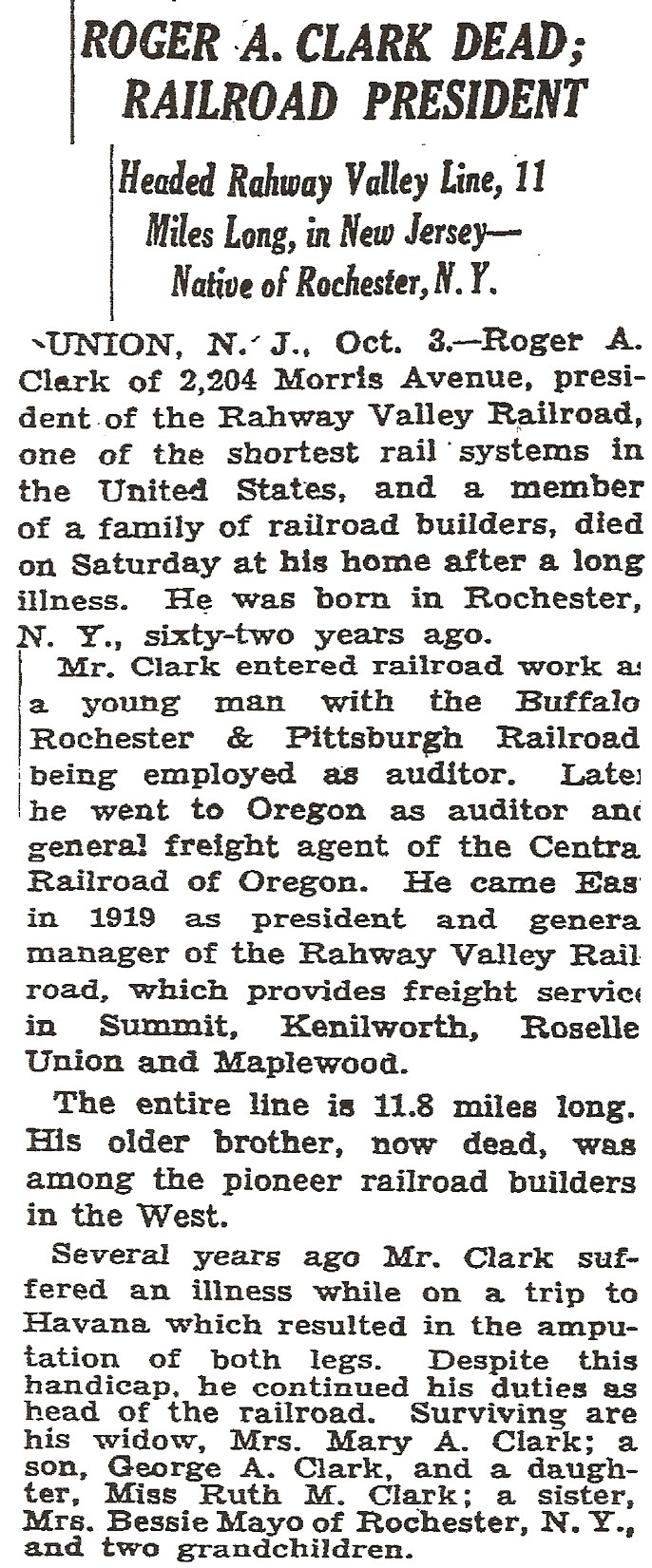
Roger A. Clark
NY Times Oct 4, 1932
|
Paul Donovan, VP RVRR Dies Herald Statesman March 31, 1959 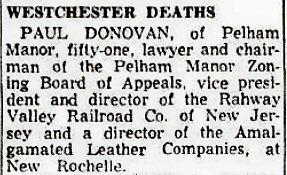
|
||
|
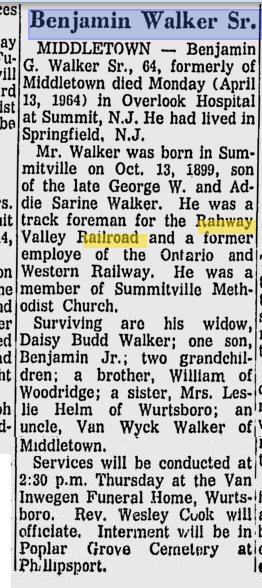
Benjamin Walker - Foreman RVRR Dead Evening
News April 15, 1964
|
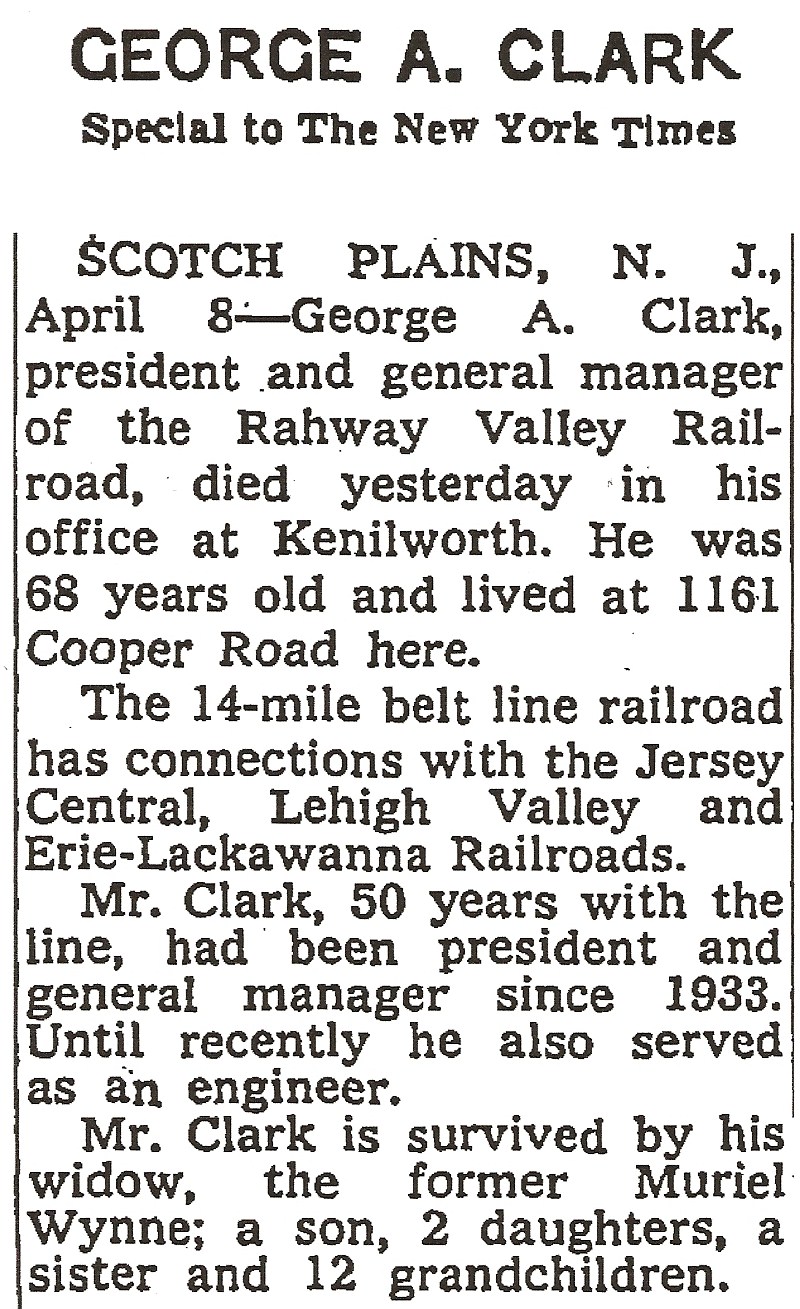
George C. Clark NY Times,
April 19, 1969
|
||
Henry Waffle Daily Gazette, April 13 1991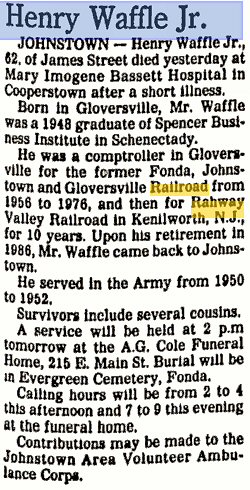
|
|||