|
Calverton
|
|
DEPOT BUILT: 1880 AS “BAITING
HOLLOW”, CLOSED AND MOVED
TO PRIVATE LOCATION: 1922 |
|
Calverton
|
|
DEPOT BUILT: 1880 AS “BAITING
HOLLOW”, CLOSED AND MOVED
TO PRIVATE LOCATION: 1922 |
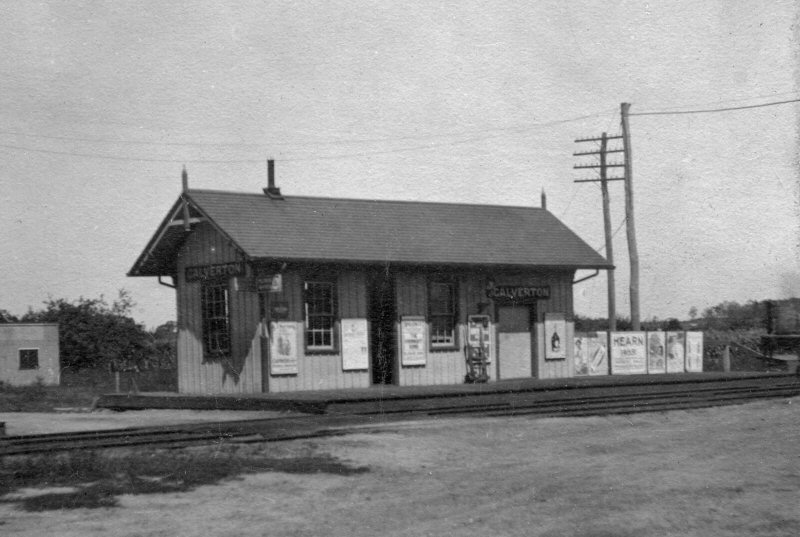 Calverton Station c.1895 view N Archive: Dave Keller |
|
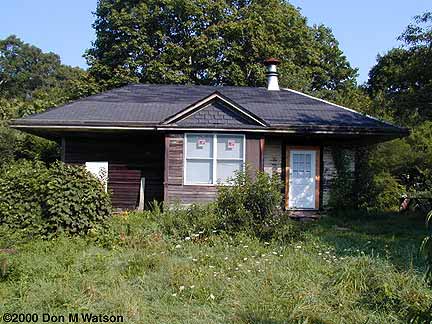 Calverton Station 2000 Photo: Don M. Watson |
|
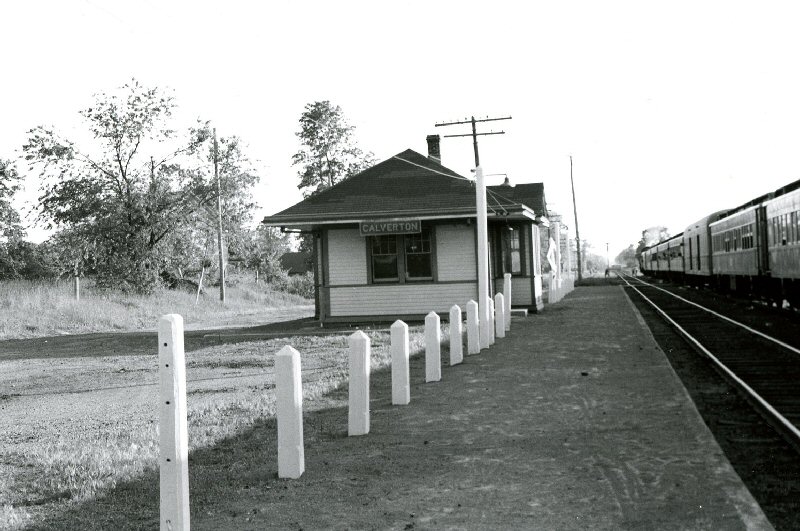
The earlier 1880-era Calverton station
(photo above) was constructed on the north side of the tracks and west
of Edwards Avenue (see 1924 map inset below -Emery 10/57). I date this image c. 1895 as there is a private road crossing in view and later images show a low level wooden station platform and high-level express platform across what once was the private crossing. Emery's map inset states the private road was closed in
1924 and (according to Emery) a new depot was constructed on the south
side of the tracks and EAST of Edwards Avenue. (Note: Ron Ziel
states 1922.) It's possible that the station was relocated to allow for the construction of the additional tracks and produce house on the former station site. The original depot was moved to a private location. The replacement depot years later was ALSO moved to a private location. Research: Dave Keller |
||
%20-%2006-29-22%20(LIRR%20Valuation)_Emery-SUNY.jpg) Calverton Station View NE 6/29/1922 Photo: LIRR Valuation Archive: Emery-SUNY Stony Brook |
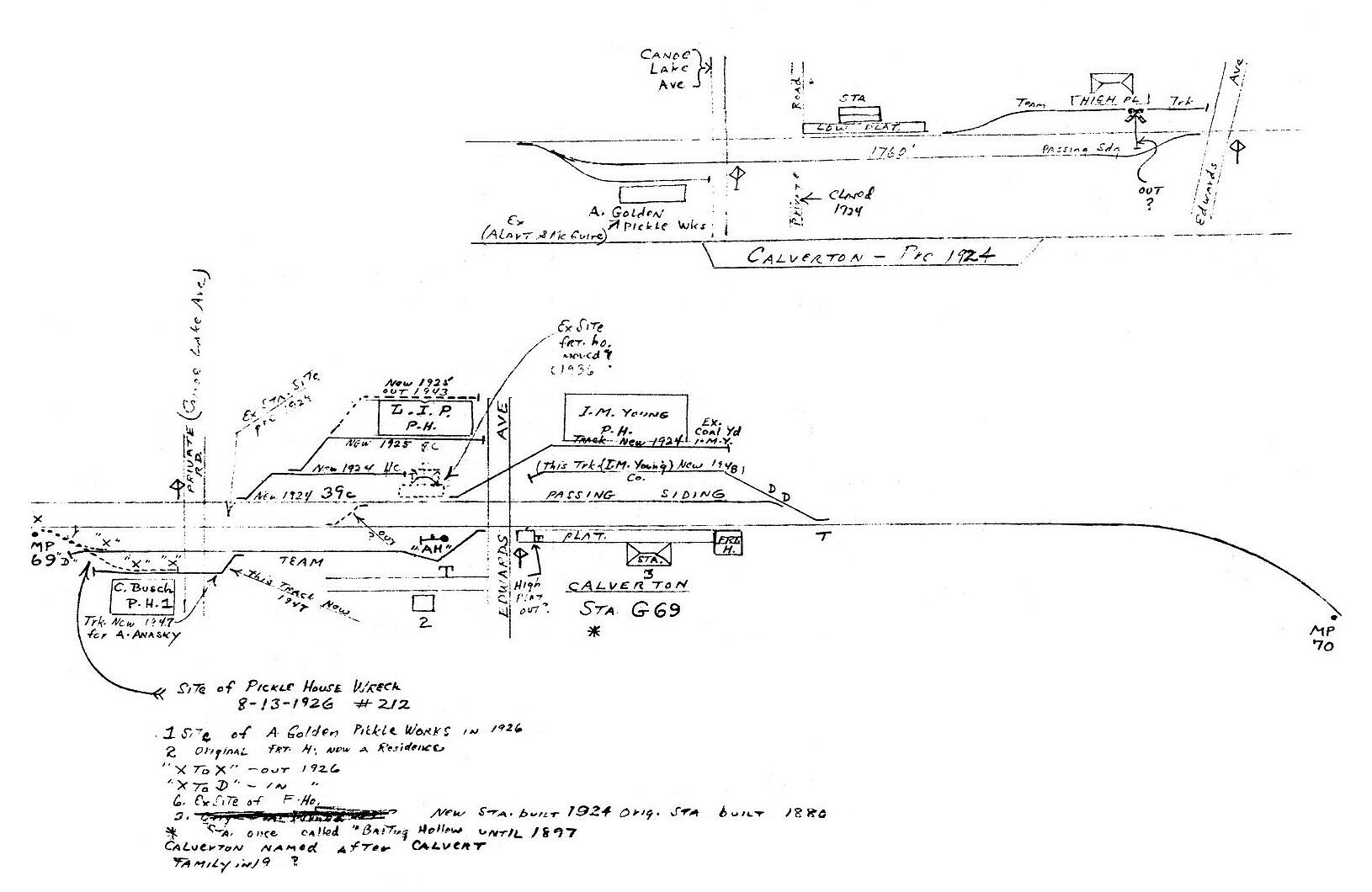 Emery Calverton MP69-70 10/1957 |
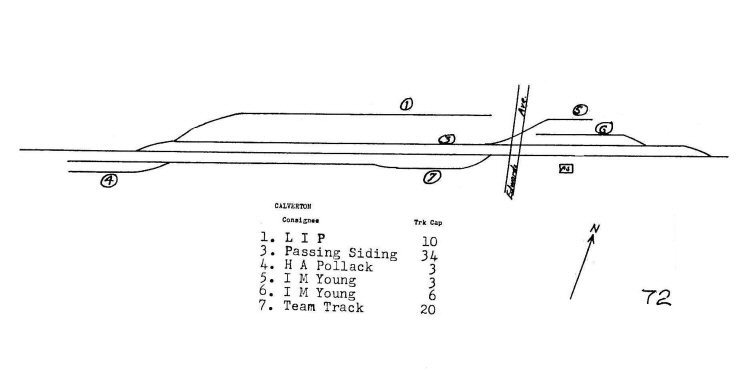 Calverton LIRR maps 1966 page 72 |
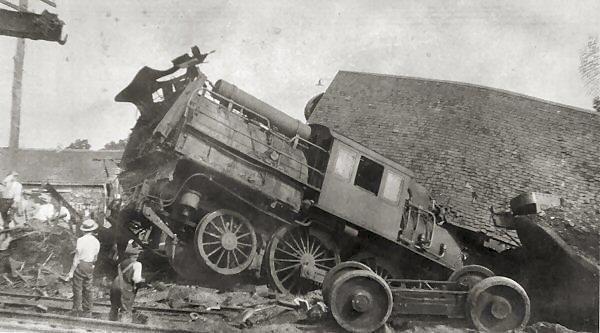 Golden's Pickle Works Wreck 8/13/1926 |
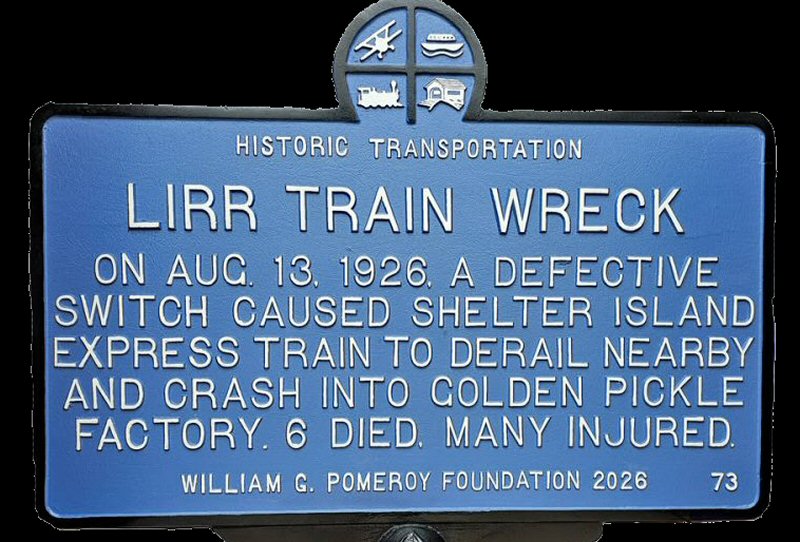 Calverton Golden Pickle Factory Wreck 8/13/1926 Historic Marker - William G. Pomeroy Foundation - 2026 |
.JPG) G5s #39 and railfan extra westbound on the passing siding across from the former express house relocated on private property. View is SE - June, 1955 (Dave Keller archive) |
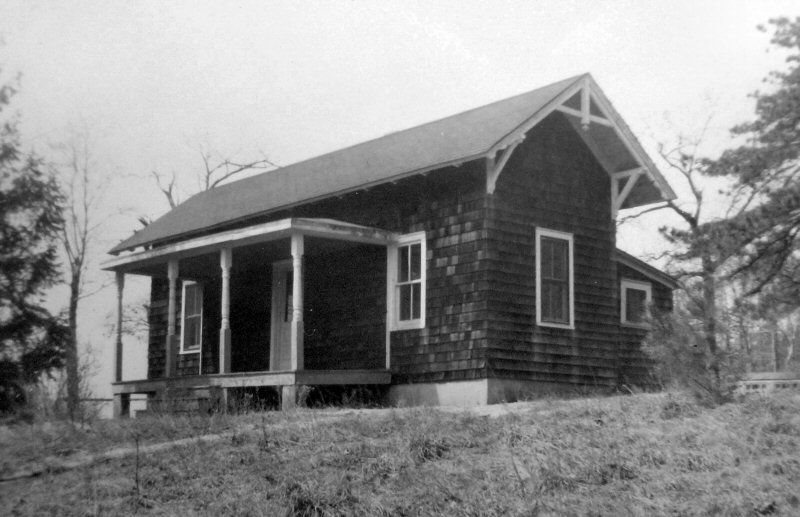 Calverton Station - Original Depot on Private Property 2/1960 Archive: Emery-SUNY Stony Brook |
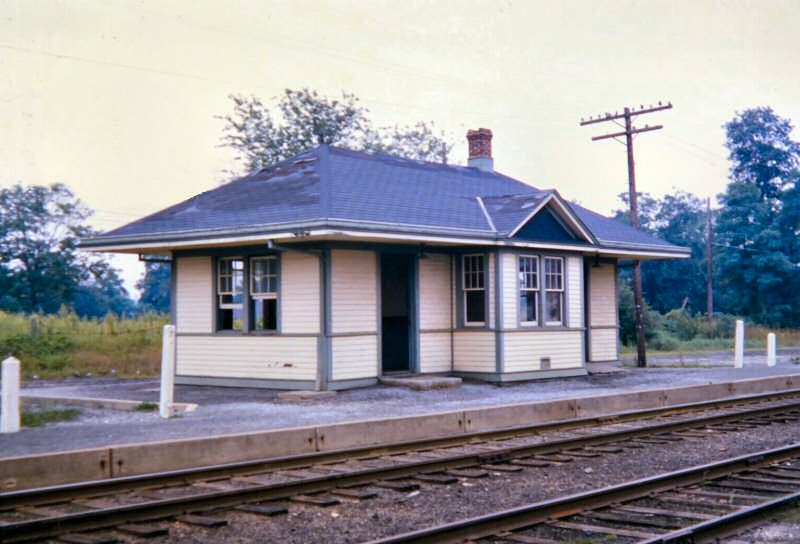 Calverton Station view SW 1962 |
|
| The depot had been abandoned and was about to be moved off site to a private location in E. Moriches. Dave Keller | ||
|
|
||
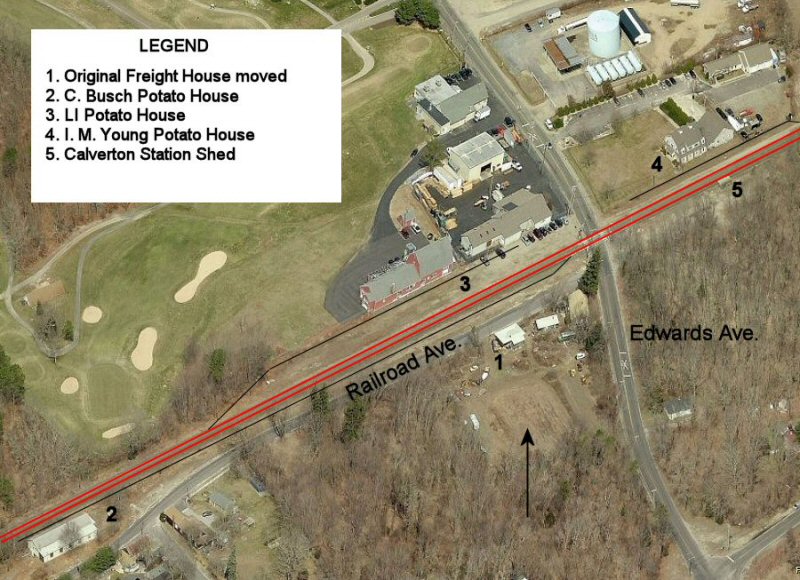
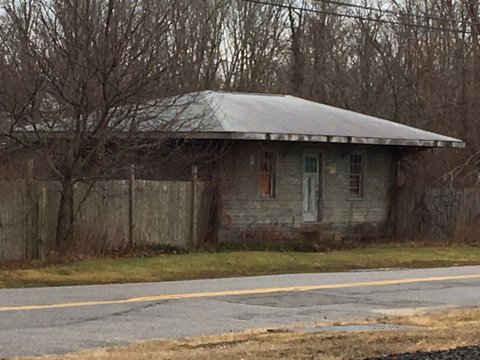 Calverton - ex-freight house moved c.1936, as per Robert Emery map (see above) View S 1/03/17 Photo: Steven Rothaug |
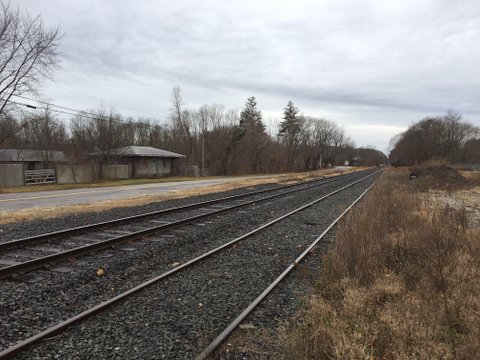 Calverton Edwards Ave View W 1/03/17 Photo: Steven Rothaug |
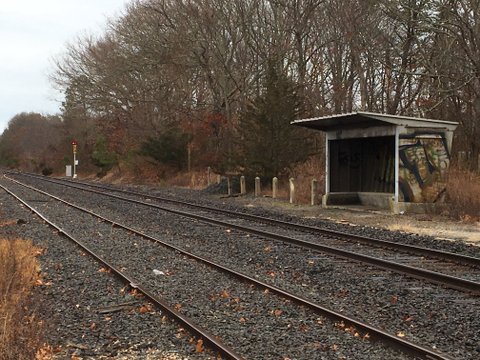 Calverton Station Shed view E 1/03/17 "AH" block limit signal in the left background. Location #5 Photo: Steven Rothaug |
|
Photos above are ex-Freight House location #1 above |
||
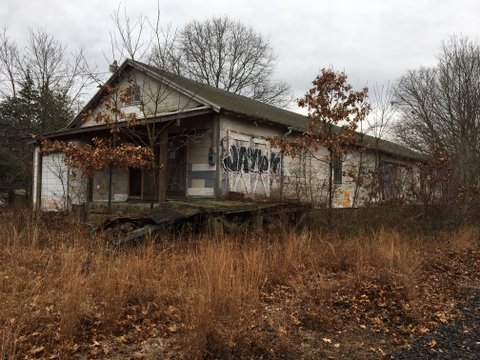
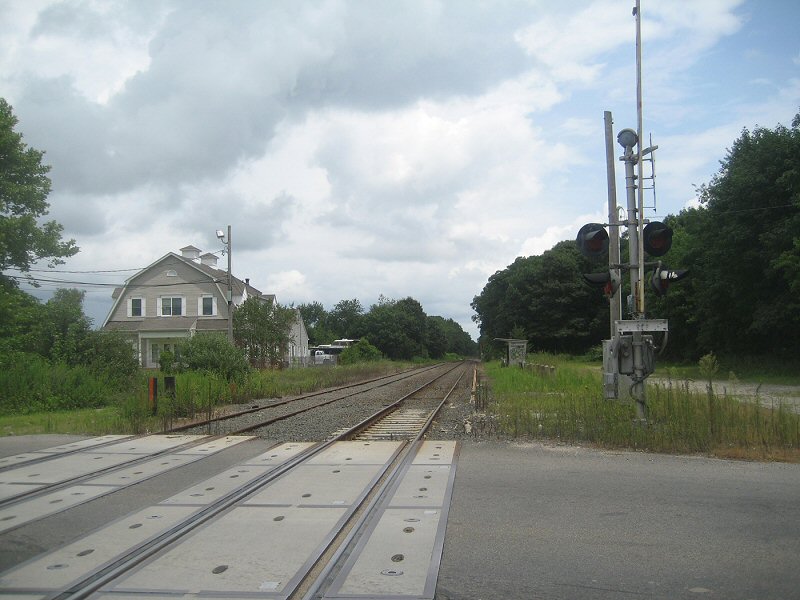 Calverton Ex-I. M. Young Potato House View E 4/10/2018 Photo: Dave Morrison |
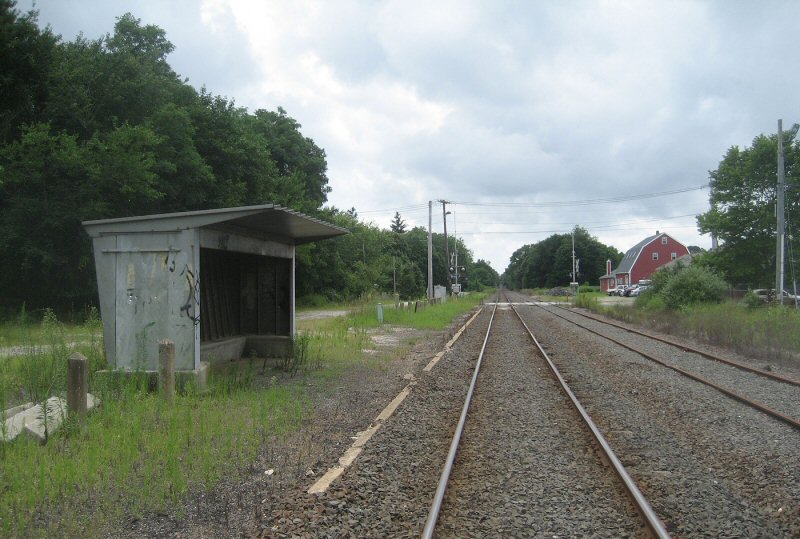 Calverton Station Shed view W 4/10/2018 Photo: Dave Morrison |
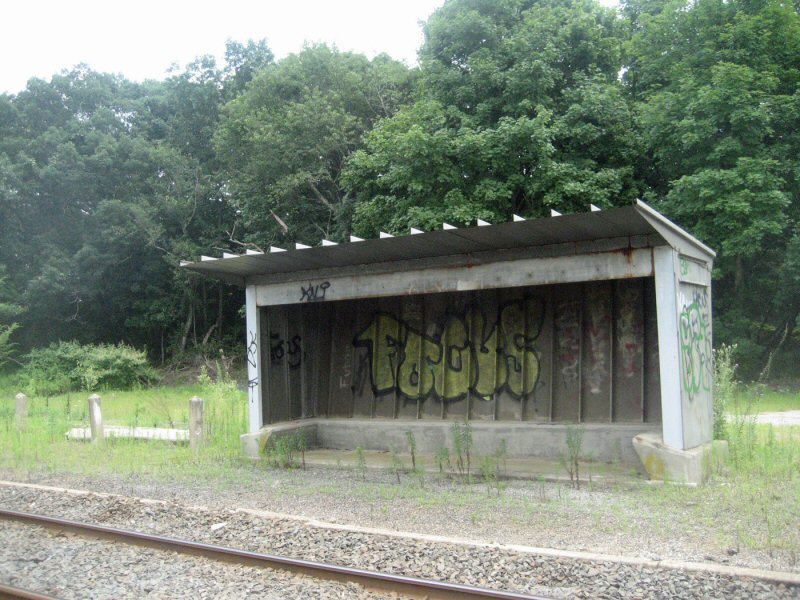 Calverton Station Shed view S 4/10/2018 Photo: Dave Morrison |
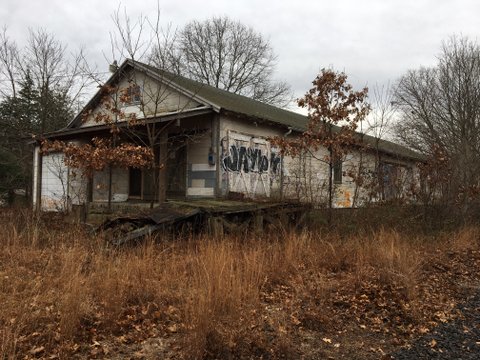 Calverton - ex-C. Busch Potato House View SW 1/03/17 Photo: Steven Rothaug |
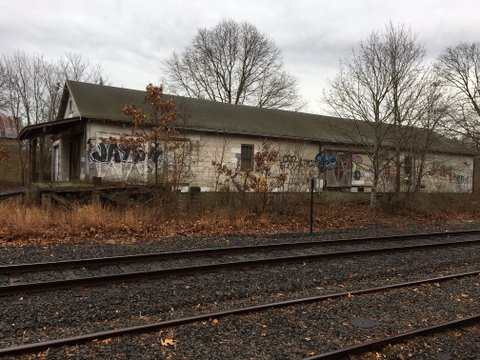 Calverton - ex-C. Busch Potato House View S 1/03/17 Photo: Steven Rothaug |
 Calverton - ex-C. Busch Potato House View E 1/03/17 Photo: Steven Rothaug |
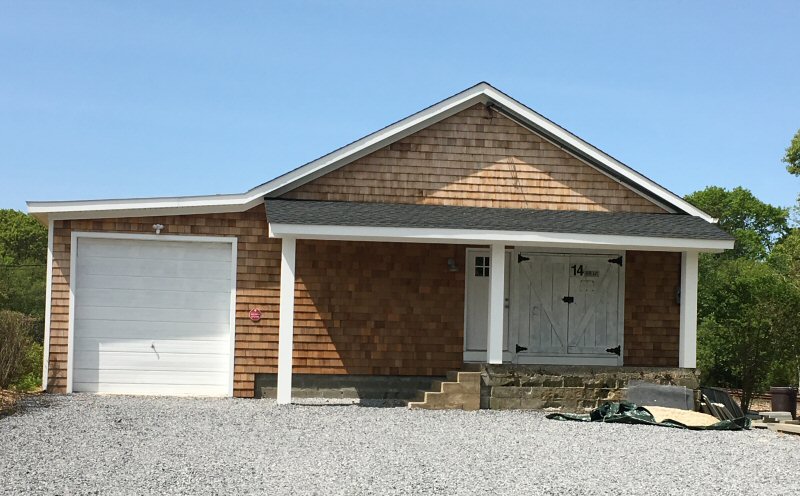 Calverton - ex-C. Busch Potato House rebuilt View W 5/2019 Photo: Steven Rothaug |
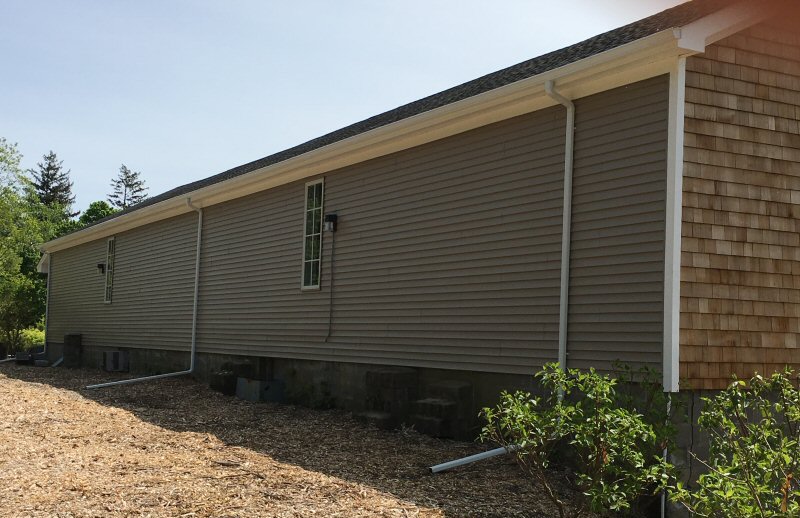 Calverton - ex-C. Busch Potato House rebuilt View E 5/2019 Photo: Steven Rothaug |
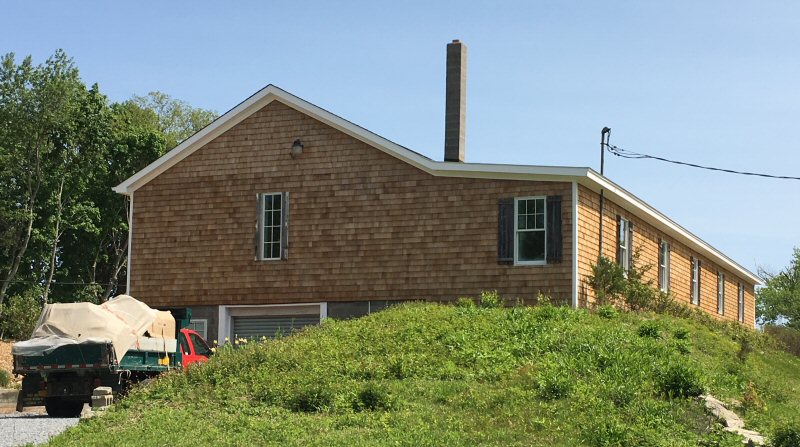 Calverton - ex-C. Busch Potato House rebuilt View E 5/2019 Photo: Steven Rothaug |
| Photos above are ex-C. Busch Potato House location #2 above | ||
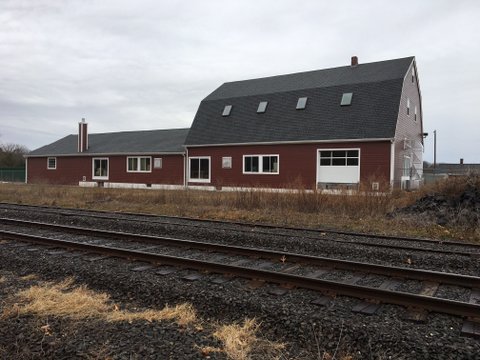 Calverton - West of Edwards Ave View N 1/03/17 Photo: Steven Rothaug |
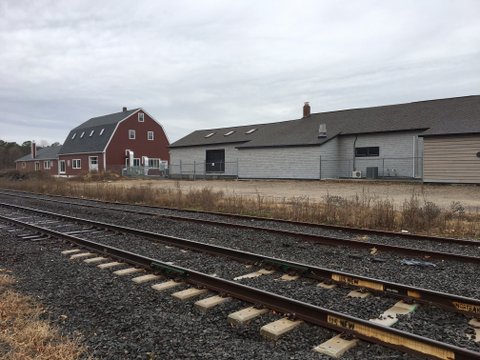 Calverton - West of Edwards Ave View NW 1/03/17 Photo: Steven Rothaug |
 Calverton - West of Edwards Ave View NE 1/03/17 Photo: Steven Rothaug |
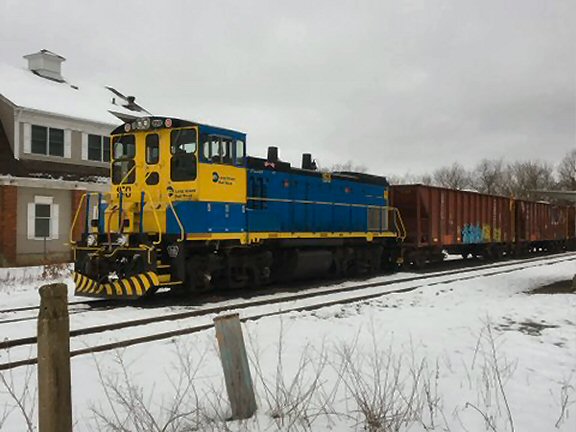 Calverton - LIRR #150 eastbound freight 4/02/2018 Photo: Steven Rothaug |
 Calverton - West of Edwards Ave View NW 1960 Archive: Dave Morrison |
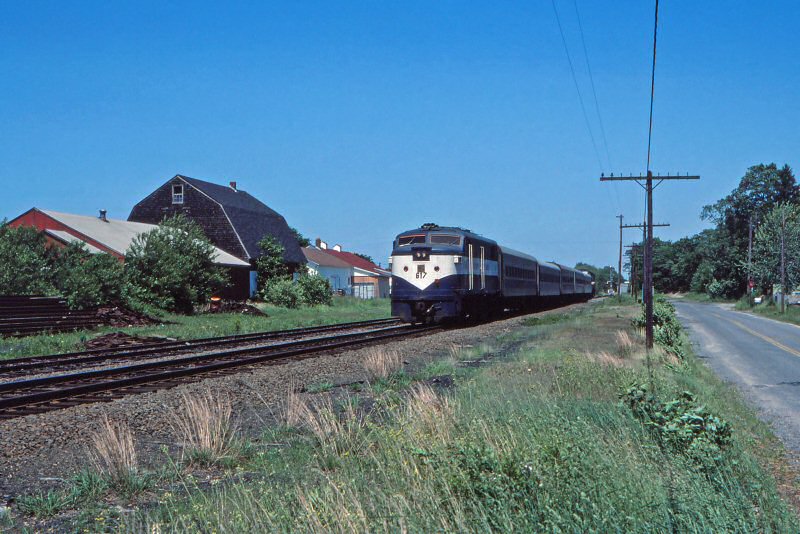 Calverton - LIRR #617 westbound Train #4201 6/1985 Photo/Archive: Jay Bendersky |
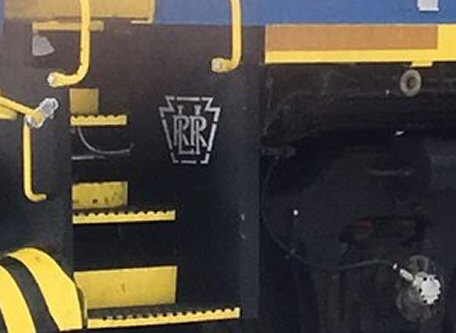 Calverton - LIRR #150 stencil zoom 4/02/2018 4/02/2018 Photo: Steven Rothaug |
 Calverton - West of Edwards Ave View E - LIRR #150 eastbound hopper freight 4/02/2018 Photo: Steven Rothaug |
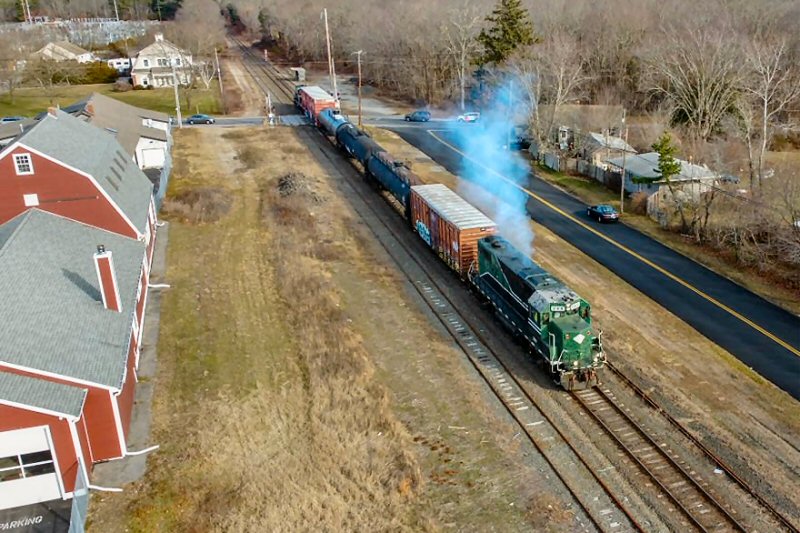 Aerial 1/08/2023 of NYAR RS71 smoking up the old Calverton Station on the way back to Pineaire Yard after serving Paraco Gas in Riverhead. Photo/Archive: Craig Lignelli |
| Photos above are at ex-LI Potato House location #3 above | ||
| GRUMMAN SPUR | ||
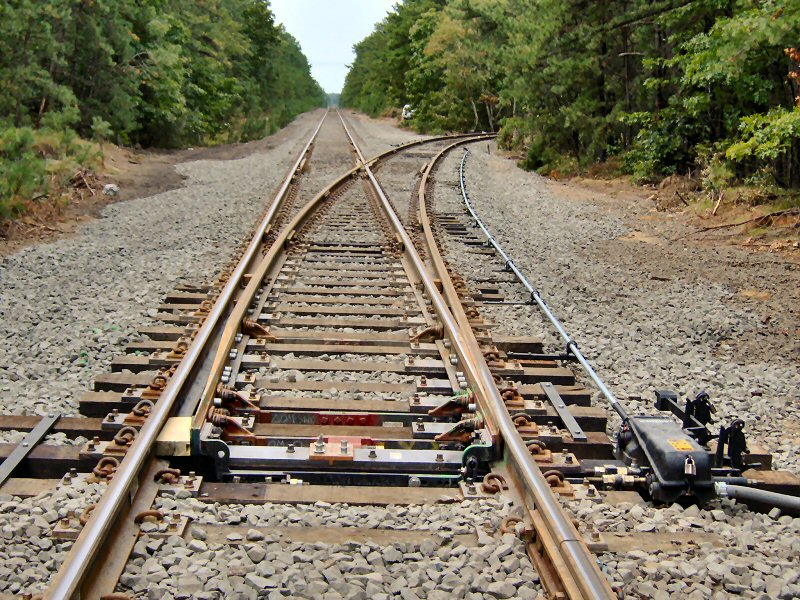 Calverton switch off main view W 2007 Photo/Archive: Tom Collins |
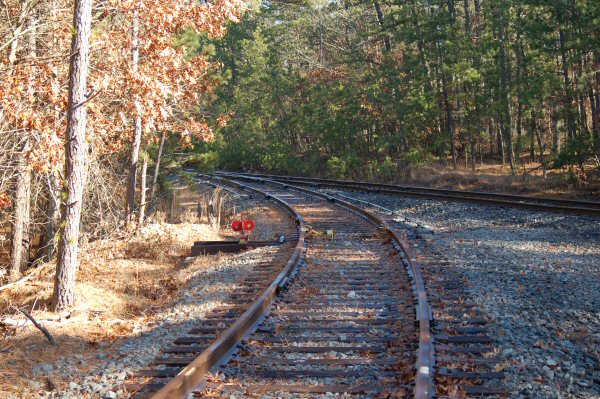
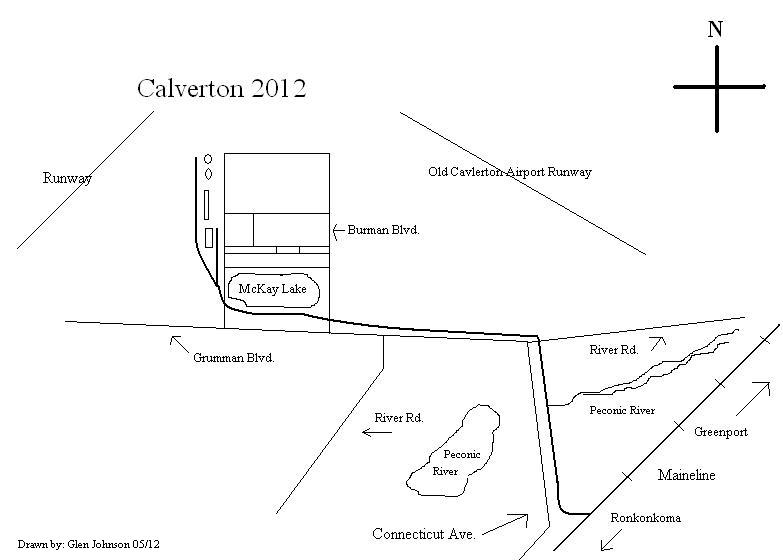
This switch is about 1-3/4 miles west of Edwards Ave and is the access to the former Grumman property, now EPCAL (Enterprise Park-Calverton). It runs north parallel with Connecticut Ave then west on the north side of Grumman Blvd. (ex-River Rd. - see map below). Eventually it turns north to the manufacturing area. Info: Steve Rothaug |
 Grumman Spur, Calverton turnout switch machine 2007 Photo/Archive: Tom Collins |
 Grumman Spur, Calverton switch off main view E 1/01/2012 Photo: Glen Johnson |
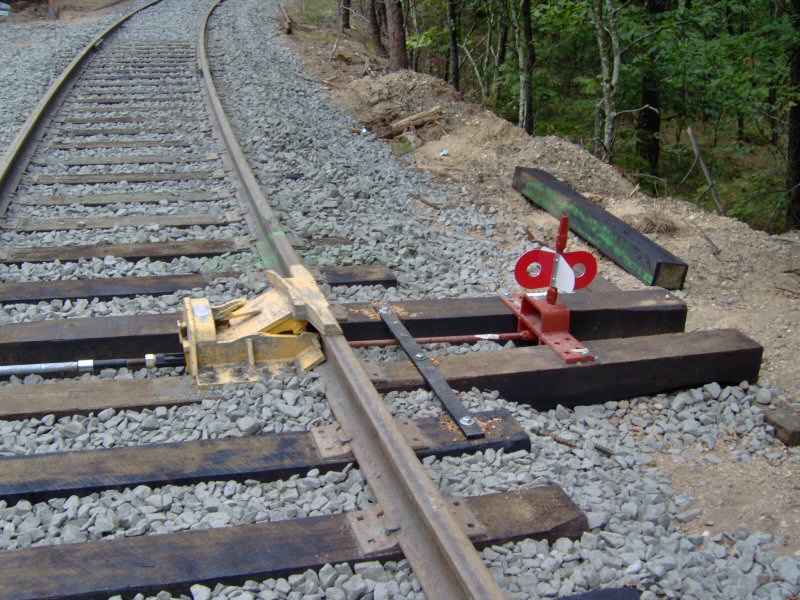 Grumman Spur, Calverton derail 2007 Photo/Archive: Tom Collins |
|
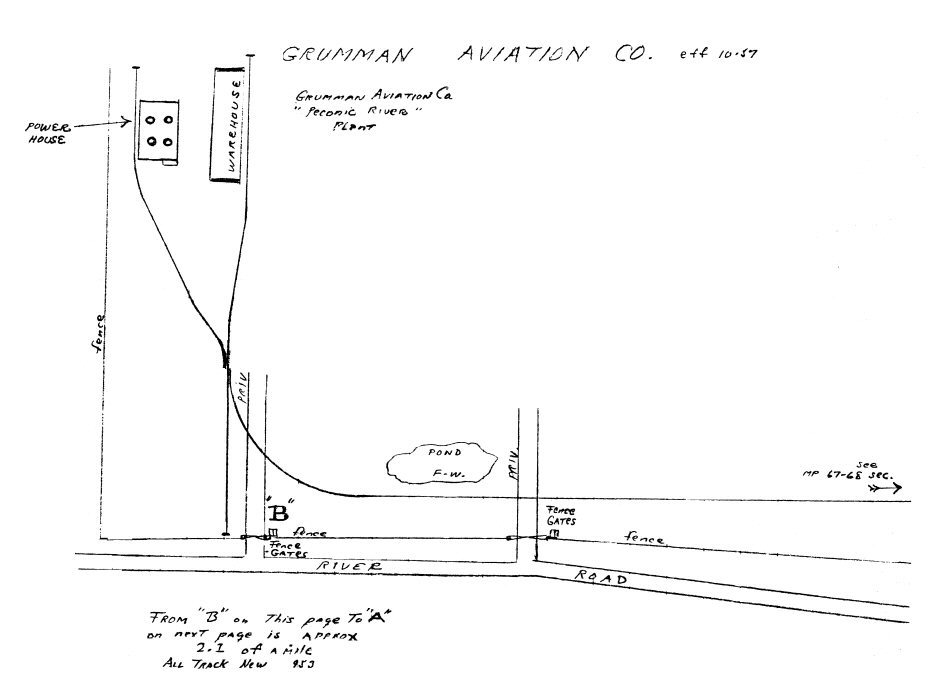 Emery Calverton-Grumman Plant 10/1957 Archive: Dave Keller Note: The run-around track was added sometime after Emery's map of 10/1957. Dave Keller |
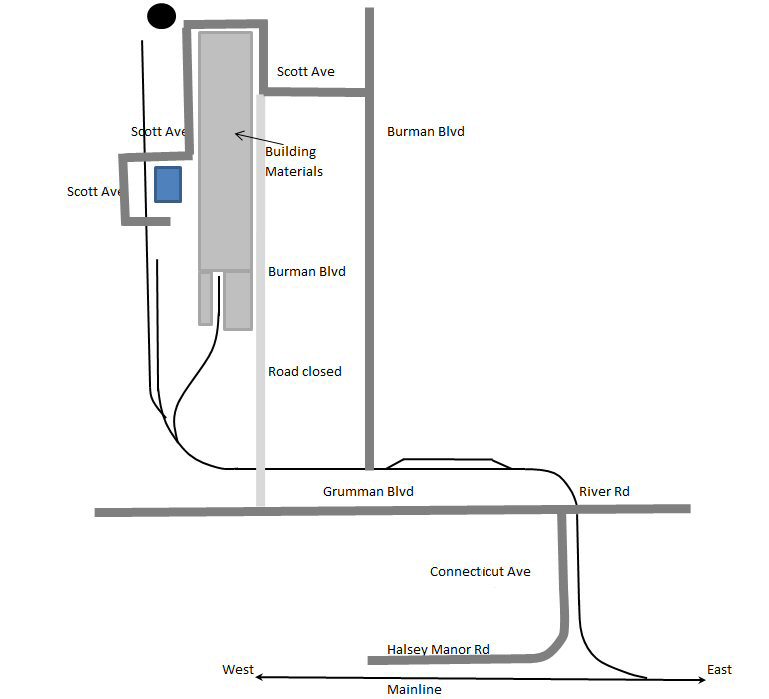 Ex-Grumman Plant, Calverton map 04/2018 Research/Design: Steve Rothaug |
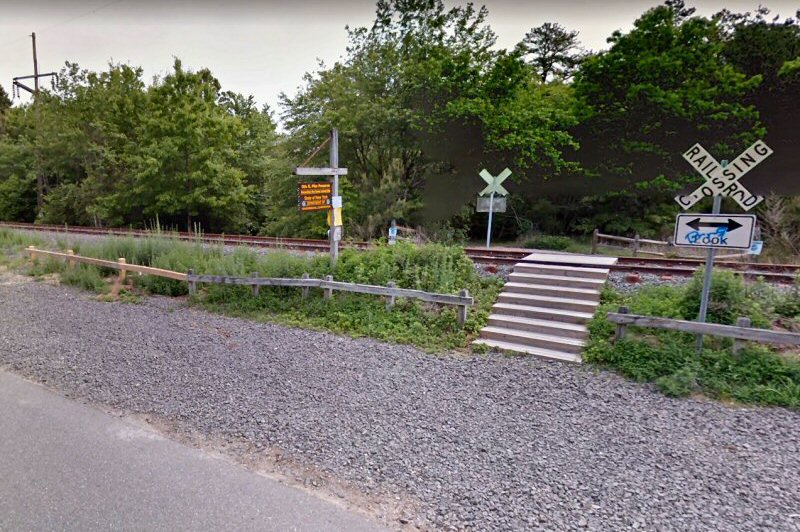 Grumman Spur - Crosswalk to the Peconic River at Connecticut Ave - View E Google Earth 2018 |
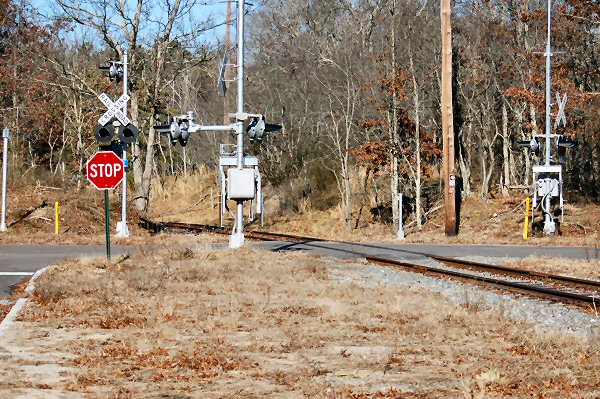 Calverton siding River Rd crossing view N 1/01/2012 Photo: Glen Johnson |
 Calverton siding view W Peconic River 1/01/2012 Photo: Glen Johnson |
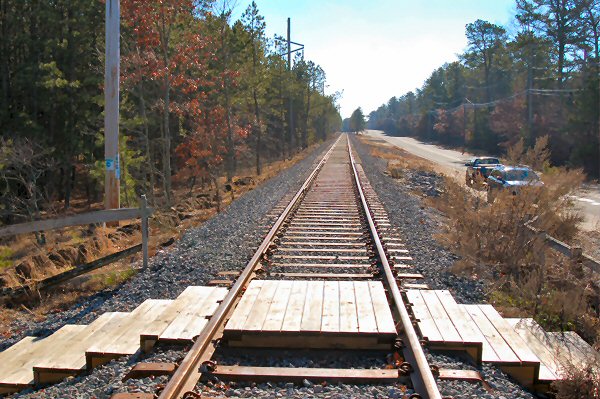 Calverton crosswalk to Peconic River view S 1/01/2012 Photo: Glen Johnson |
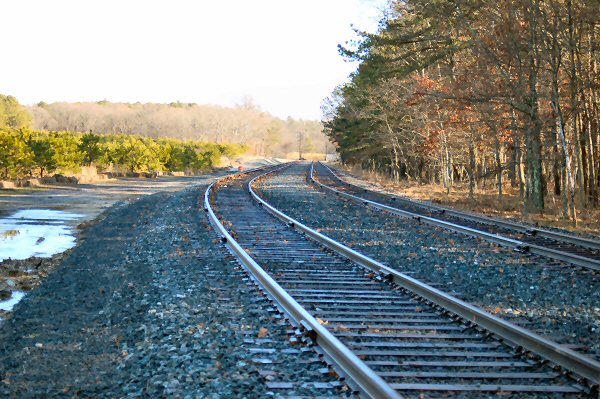 Grumman Spur - Calverton runaround view E 1/01/2012 Photo: Glen Johnson |
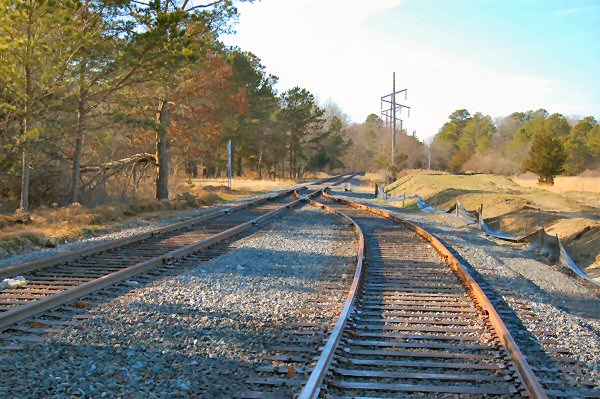 Grumman Spur - Calverton west end runaround view W 1/01/2012 Photo: Glen Johnson |
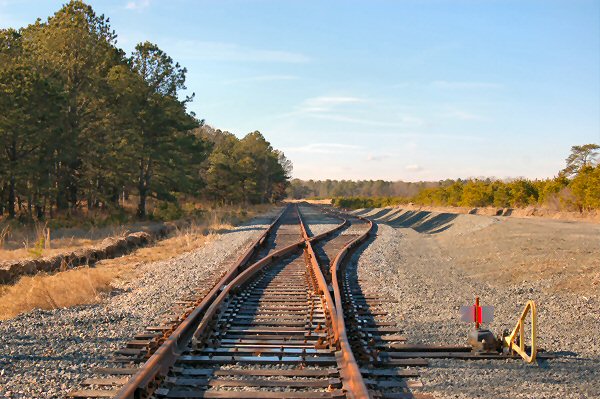 Grumman Spur - Calverton east end of runaround view W 1/01/2012 Photo: Glen Johnson |
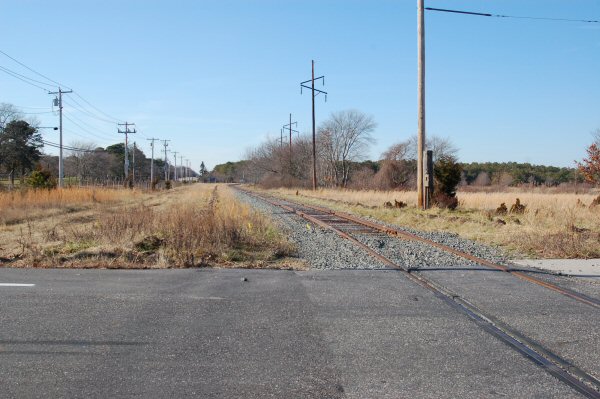 Calverton Spur crossing Burman Blvd. entering the plant View W 1/01/2012 Photo: Glen Johnson |
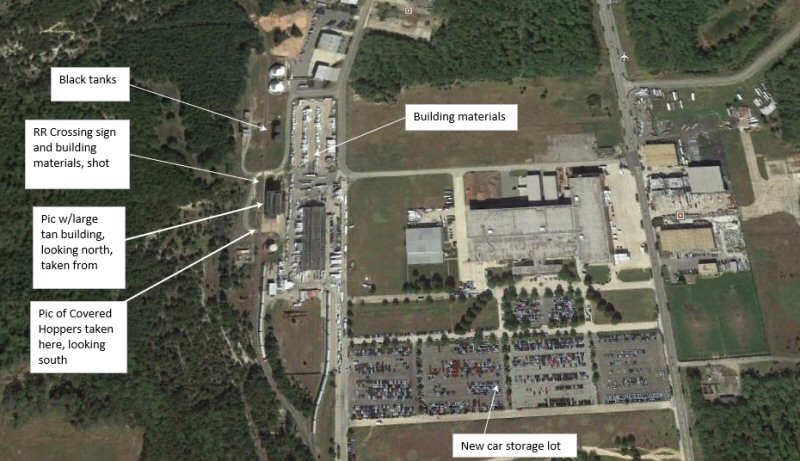 Ex-Grumman Plant, Calverton Google Earth-2018 Research/Design: Steve Rothaug |
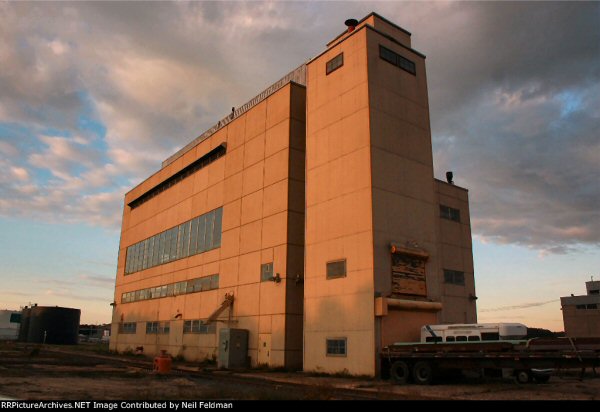 Grumman Aviation Co. Peconic River Plant. 9/10/11 Photo: Neil Feldman |
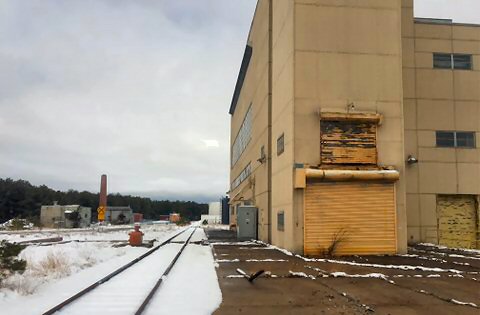
|
 |
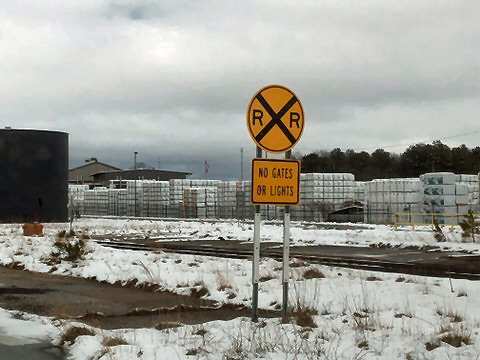 |
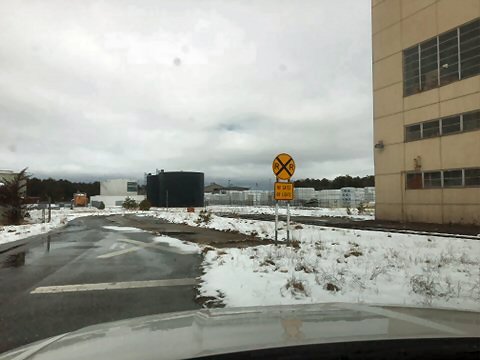
| Ex-Grumman Aviation Co. - Peconic River Plant view N 4/02/2018 Photos: Steve Rothaug | ||
 Grumman Plant end of Line view N 1/01/2012 Photo: Glen Johnson |
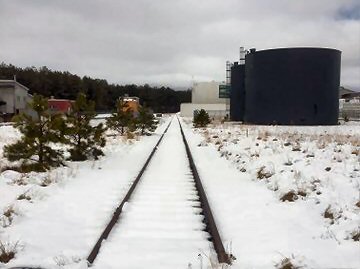 Grumman Plant end of Line view N 4/02/2018 Photo: Steve Rothaug |
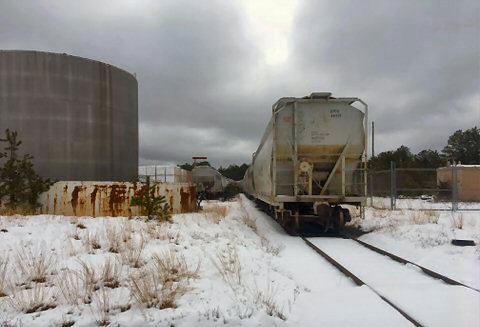
 Grumman Plant end of Line view E 4/02/2018 Photo: Steve Rothaug |
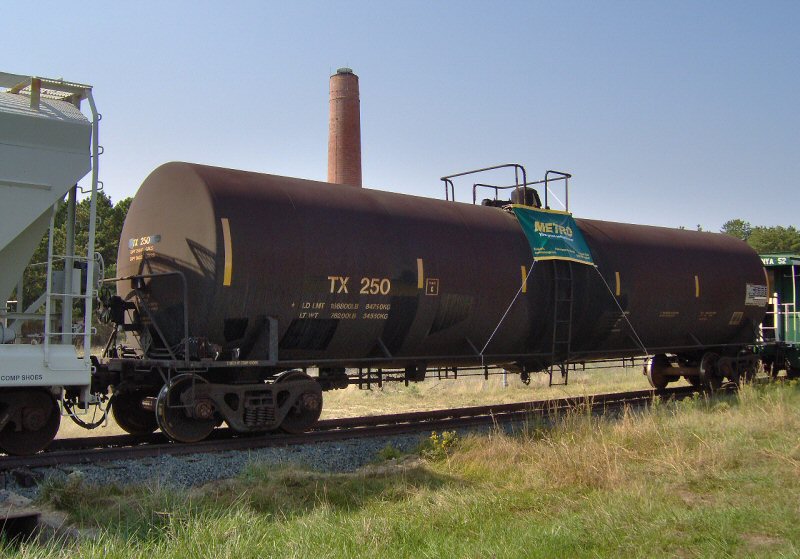 Tank TX-250 Metro Energy banner United Metro Energy, Calverton 2017 Photo/Archive: Tom Collins |
 Grumman Plant end of Line view S 1/01/2012 Photo: Glen Johnson |
 Grumman Plant View S from main building 4/02/2018 Photo: Steve Rothaug |